

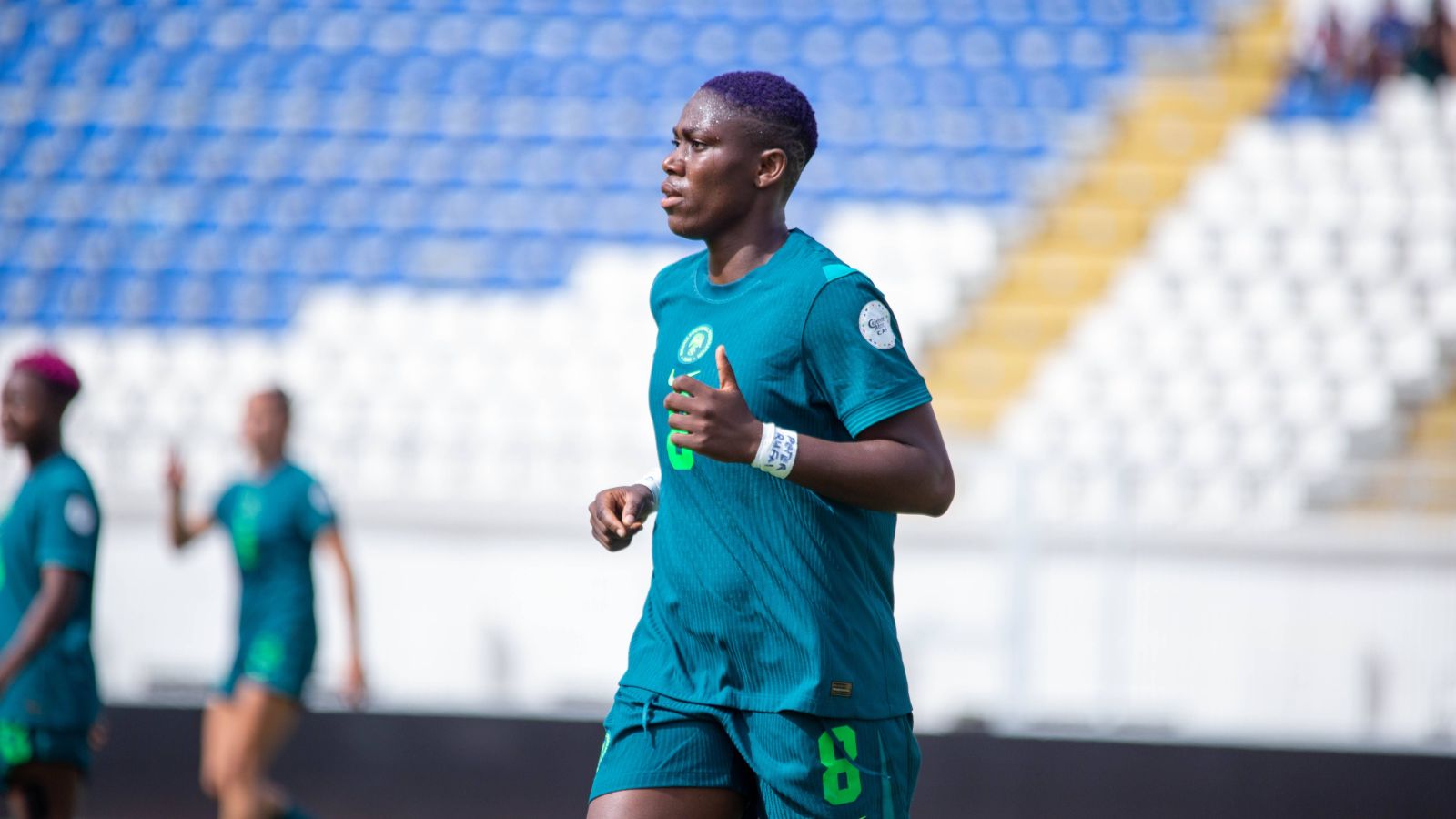
Nigeria’s Super Falcons and South Africa’s Banyana Banyana head into the WAFCON quarterfinals with far more than a semifinal place at stake, as the tournament now has direct implications for the road to the 2027 Women’s World Cup. With the knockout bracket set and the qualification pathways clearly defined, every quarterfinal has become a high-pressure examination of ambition, composure and tournament management. Nigeria’s meeting with Cameroon immediately stands out because of the weight attached to both teams and the direct route it offers toward global qualification. South Africa, meanwhile, are involved in another marquee tie in a quarterfinal field that leaves almost no margin for error.
- Nigeria will face Cameroon in the WAFCON quarterfinals on Sunday, August 9 at 6 p.m. WAT.
- South Africa are set to meet Morocco in one of the tournament’s confirmed quarterfinal ties.
- Other confirmed quarterfinal matchups include Ivory Coast vs. Algeria.
- The top four teams at WAFCON qualify directly for the 2027 Women’s World Cup.
- Two additional teams from the losing quarterfinalists’ playoffs will advance to inter-confederation playoffs.
Quarterfinal pressure rises with World Cup places in view
The qualification structure gives this stage of the tournament unusual significance. Reaching the semifinals does not only keep a title challenge alive; it also secures direct qualification for the 2027 Women’s World Cup. That means the quarterfinals effectively serve as decisive qualification matches for the teams still standing. For nations with established continental expectations and global ambitions, that reality changes the emotional and tactical temperature of every contest.
Nigeria enter that environment with the spotlight firmly fixed on their clash against Cameroon. The scheduled kickoff on Sunday, August 9 at 6 p.m. WAT provides a clear marker for one of the most important fixtures of the round, and the stakes are straightforward even if the football itself is unlikely to be. A win sends Nigeria into the semifinals and secures one of the four direct World Cup places available through the tournament. A defeat would not end every qualification hope, but it would force a more complicated and uncertain route through the losing quarterfinalists’ playoff system.
That is what makes the quarterfinal stage so compelling across the board. Teams are not only trying to stay alive in the competition; they are also trying to avoid extending their qualification journey. The top four finishers move directly to the Women’s World Cup, while two more teams from the losing quarterfinalists’ playoffs can still progress to inter-confederation playoffs. In practical terms, that creates both urgency and tension, because one result can deliver certainty while another leaves a side navigating a much longer path.
The pressure is heightened by the fact that this round compresses two major objectives into a single match. A team can move one step closer to the continental title while also locking in a place on the global stage. That combination naturally sharpens focus and raises the cost of mistakes. In a tournament setting, where margins are often thin and momentum can shift quickly, the quarterfinals become a test not just of quality but of nerve.
Nigeria, South Africa and the shape of the knockout bracket
For Nigeria, the matchup with Cameroon feels like a defining checkpoint rather than just another knockout game. The Super Falcons are among the teams pursuing Women’s World Cup qualification, and their quarterfinal assignment underlines how little separation there is between tournament progress and global consequence. Facing Cameroon means taking on a direct rival in a single-elimination setting where patience, control and discipline are likely to matter as much as attacking intent. Without attaching predictions to the fixture, the clearest conclusion is that Nigeria have reached the stage where execution matters more than reputation.
South Africa’s position is similarly significant. Banyana Banyana are also among the teams chasing Women’s World Cup qualification, and their quarterfinal against Morocco places them in one of the round’s headline ties. A match of that scale naturally brings pressure because the reward is immediate and substantial: a semifinal place and direct entry to the 2027 Women’s World Cup. The challenge for South Africa will be to balance knockout caution with enough conviction to take control of a game that can reshape the rest of their cycle.
The other confirmed quarterfinal ties add to the sense that this is a deeply consequential round from top to bottom. Ivory Coast vs. Algeria is part of a bracket in which every team is now within touching distance of direct qualification, while every losing side must quickly recalibrate for the playoff route. The quarterfinal lineup therefore creates two parallel stories: the chase for the WAFCON title and the race to secure World Cup places before uncertainty creeps in. That dual objective often sharpens decision-making, because teams know that one strong night can achieve two major goals at once.
There is also a broader strategic layer to this stage that should not be overlooked. In tournaments where semifinal qualification also guarantees World Cup entry, the quarterfinal can become the most psychologically demanding match of all. Finals and semifinals carry prestige, but quarterfinals often carry the heaviest burden because they determine whether a team earns immediate reward or is pushed into a more fragile second chance. That dynamic should shape the tone of these fixtures, especially for established contenders such as Nigeria and South Africa, who will understand that the cost of a single off day is far greater than simple elimination from the title race.
For both Nigeria and South Africa, the quarterfinals are therefore about turning status into certainty. Each side remains in the group of teams still driving toward Women’s World Cup qualification, but that pursuit now comes down to one match and one result. Win, and the path opens into a semifinal and direct qualification. Lose, and the route becomes more complicated, with the possibility of advancing only through the losing quarterfinalists’ playoffs and then into inter-confederation playoffs.
What comes next is a weekend in which the tournament’s biggest ambitions will be tested all at once. Nigeria know exactly when their opportunity arrives against Cameroon, while South Africa prepare for a quarterfinal against Morocco with the same direct prize in sight. Alongside Ivory Coast and Algeria, they are part of a knockout field now defined as much by consequence as by competition. By the end of the quarterfinal round, four teams will have secured direct qualification for the 2027 Women’s World Cup, and the rest will be left to fight for a more difficult route forward.



Leave a Reply