

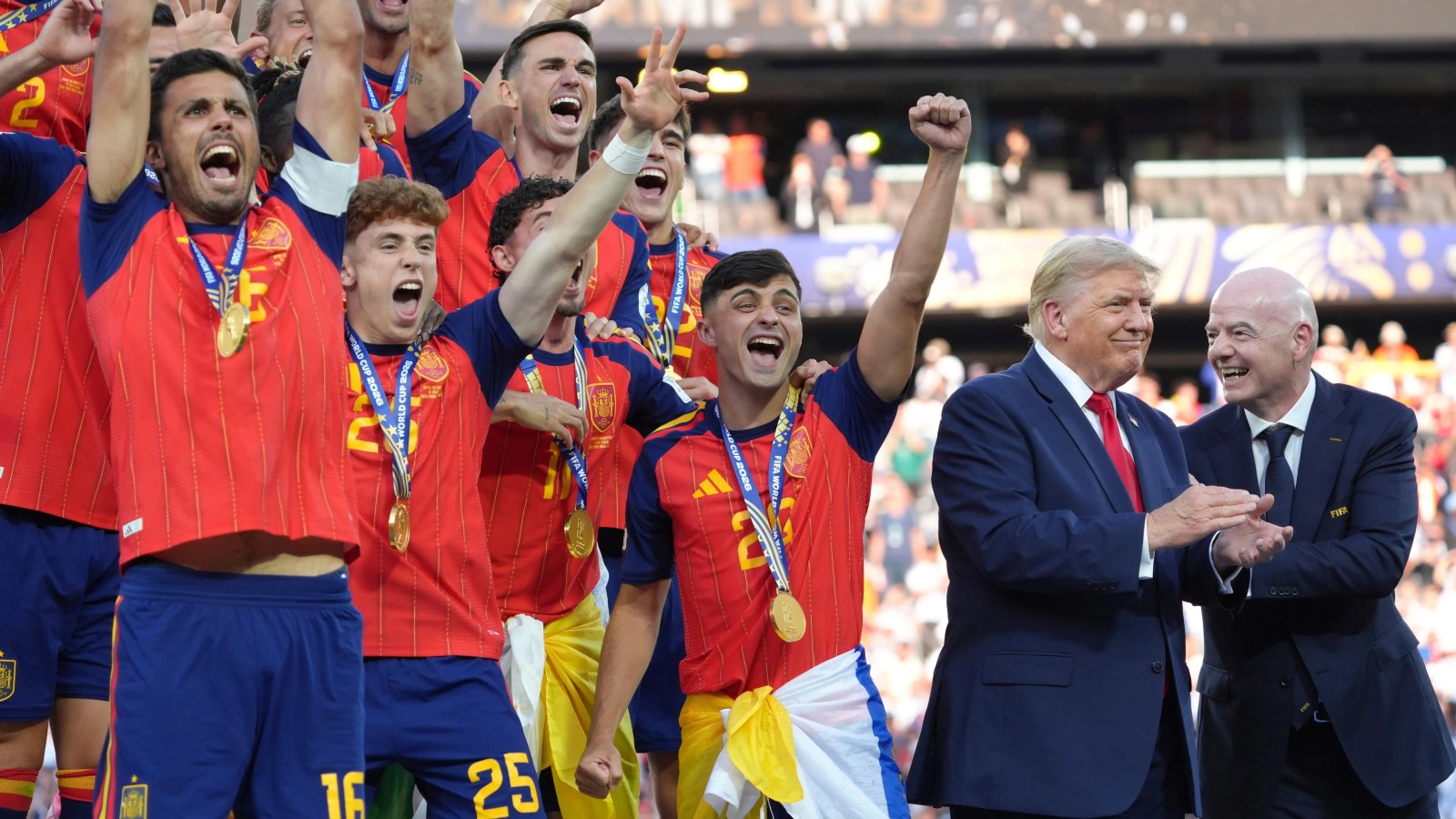
FIFA has opened what could become a transformative debate over the future of the World Cup by announcing plans to explore selling stakes in a commercial entity covering the tournament and other competitions. The proposal matters because it points to a significant shift in how the game’s biggest events could be financed and managed, with FIFA presenting the move as part of a push to maximise revenue from future World Cups and related events. At the same time, the idea has sparked immediate resistance, including accusations that FIFA is “selling the soul of football” and threats of a boycott from UEFA. With the planned subsidiary described as potentially being worth about $20 billion, the scale of the project underlines why this has quickly become one of the most consequential off-field stories of the 2026 World Cup cycle.
- FIFA has announced plans to explore selling stakes in a commercial entity covering the World Cup and other tournaments.
- The proposal is part of an effort to maximise revenue from future World Cups and other events.
- The planned subsidiary could be valued at about $20 billion.
- The move has drawn criticism, including claims that FIFA is “selling the soul of football.”
- UEFA has threatened a boycott as opposition to the proposal intensifies.
- FIFA has pushed back, insisting the move does not amount to “selling football.”
Why the proposal has become such a flashpoint
The force of the reaction reflects the World Cup’s unique place in global sport. This is not just another commercial property or a routine restructuring exercise; it concerns the competition at the centre of the international game, one that carries enormous sporting, political and cultural weight. Any suggestion that outside investors could gain a stake in the business structure surrounding that tournament was always likely to trigger concern, particularly among confederations and stakeholders who see the World Cup as a collective asset rather than a vehicle for financial engineering. That helps explain why the criticism has landed so sharply and why the language around the plan has become so heated so quickly.
The phrase “selling the soul of football” captures the emotional core of the backlash. Opponents are questioning not only the mechanics of the proposal but also the principle behind it, arguing that the commercial rights attached to the sport’s biggest competitions should not be opened to private investors. Even without fuller detail on the exact structure, the prospect of an investment vehicle tied to the World Cup raises broader concerns about influence, governance and long-term control. Those concerns are intensified by the scale attached to the project, with a valuation of about $20 billion indicating that FIFA is considering an entity of major commercial significance rather than a minor administrative adjustment.
UEFA’s threat of a boycott takes the dispute beyond rhetoric and into the realm of genuine political leverage. Even at an early stage, a boycott threat signals that resistance is not limited to abstract criticism and could develop into a serious power struggle over the direction of the international game. For FIFA, that creates an immediate balancing act: it wants to present the proposal as a rational step toward stronger revenues, but it must also manage the risk that key stakeholders view the move as a challenge to football’s traditional structures. The speed with which the debate has escalated shows how sensitive the issue is and how carefully FIFA will have to navigate the next phase.
What it could mean for the 2026 World Cup and beyond
From FIFA’s perspective, the central argument is straightforward. The governing body insists that exploring investment in a commercial subsidiary does not amount to “selling football,” and it has framed the idea as a way to maximise revenue from future World Cups and other events. That positioning is significant because it suggests FIFA believes there is untapped value in packaging its commercial rights more aggressively or more efficiently than before. In practical terms, the proposal appears designed to unlock capital and potentially create a structure capable of generating larger returns around the World Cup ecosystem, rather than changing the sporting competition itself.
That distinction will sit at the heart of the debate to come. FIFA is effectively arguing that there is a meaningful difference between selling the game and selling a stake in a business vehicle linked to the game’s commercial rights. Critics, however, are likely to challenge whether that separation can truly hold once private investors are involved in an entity built around the World Cup and other tournaments. The tension lies in the possibility that a revenue-maximising model could shape future decisions on scheduling, packaging, access or commercial priorities, even if the tournament itself remains under FIFA’s formal control. That is why the governing body’s reassurance may not, on its own, be enough to calm opposition.
For the 2026 World Cup, the story matters because it adds a major governance and financial subplot to the build-up to the tournament. The competition is already one of the most commercially powerful events in world sport, and any move to reorganise the business around it carries consequences that extend well beyond balance sheets. It affects how federations, confederations and commercial partners may interpret FIFA’s strategic direction in the years leading into the event. Even if the proposal remains at an exploratory stage, the conversation itself signals that FIFA is thinking aggressively about the long-term monetisation of its flagship competitions.
The estimated $20 billion valuation also offers a clear indication of FIFA’s ambition. A figure of that size places the proposed subsidiary among the upper tier of global sports business assets and helps explain both the attraction for investors and the alarm among critics. It suggests FIFA believes the commercial future of the World Cup and its wider tournament portfolio can support an exceptionally large enterprise value. At the same time, that valuation inevitably sharpens scrutiny, because the larger the number, the more stakeholders will ask what exactly is being offered, what influence comes with it and how the proceeds would serve the broader interests of the game.
There is also a broader strategic question beneath the immediate controversy. If FIFA succeeds in moving this plan forward, it could set a precedent for how major football properties are structured and monetised in the future. If resistance hardens, however, the episode may instead reveal the limits of how far football’s governing institutions can push commercial innovation when it touches the symbolic heart of the sport. Either way, the proposal has already exposed a fault line between FIFA’s revenue-driven case for change and the belief among critics that some assets are too central to football’s identity to be opened to private investment. That clash of visions is what gives the story such weight as the 2026 cycle gathers pace.
What happens next will depend on whether FIFA can turn its broad justification into a structure that reassures the game’s most powerful stakeholders. For now, the governing body has made clear that it wants to explore the idea and that it rejects claims it is “selling football,” but the backlash ensures that every next step will be closely contested. With boycott threats already on the table and the World Cup at the centre of the proposal, this is no longer a routine commercial discussion. It is a defining test of how FIFA intends to shape the business of its flagship tournaments ahead of 2026 and beyond.

Leave a Reply