

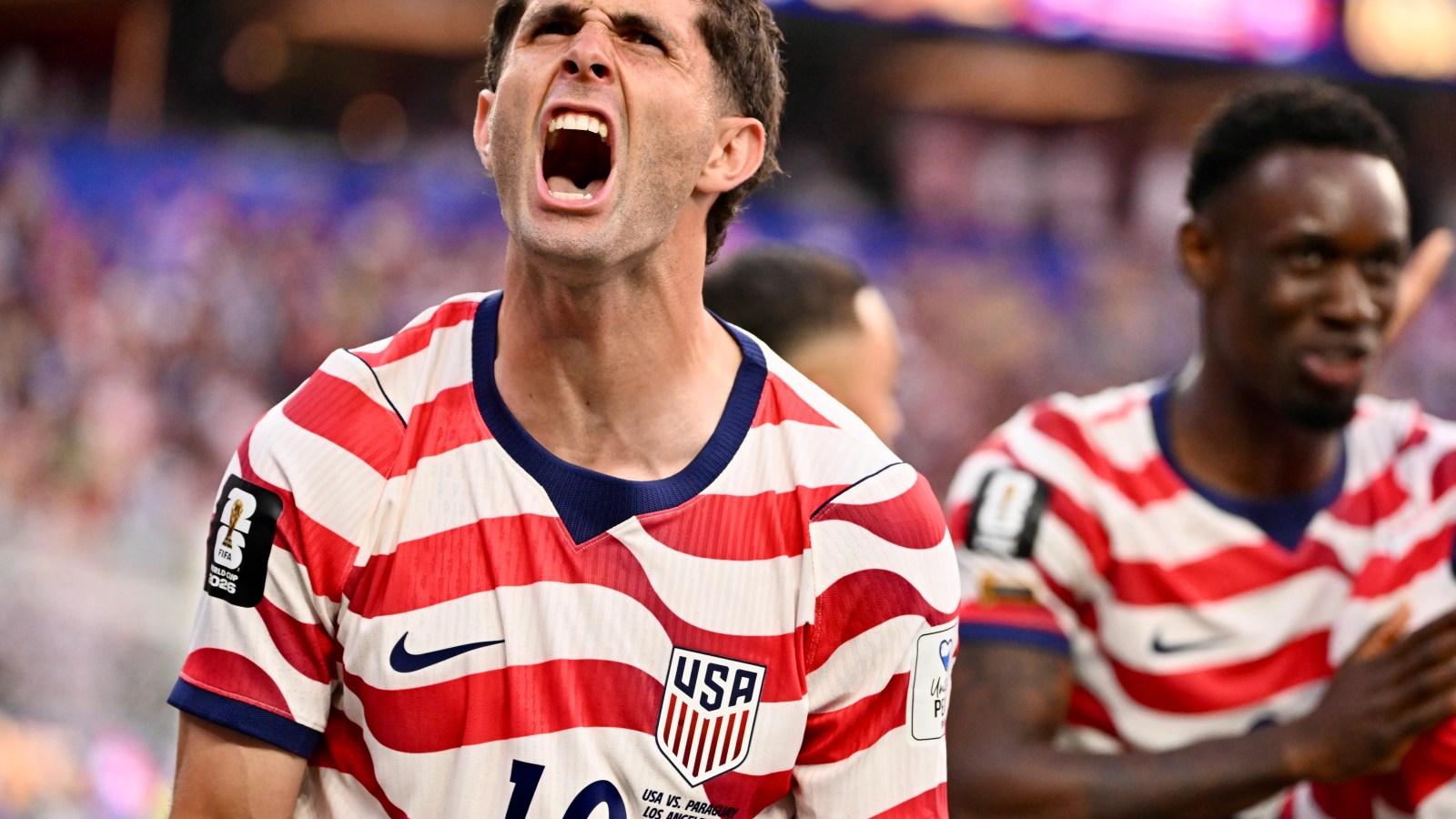
The 2026 FIFA World Cup is rapidly building a reputation for late twists, sharp momentum swings and a knockout race shaped as much by nerve as by quality. At this stage of the tournament, 16 goals have been scored after the 90-minute mark, accounting for 13.1% of all goals — a striking figure that captures how often matches are being decided in their final moments. That pattern has helped define a competition in which survival, qualification and elimination have remained in doubt until the last whistle. The standout theme is not one team or one player, but the extraordinary weight of stoppage time, where this tournament has repeatedly been turned on its head.
- Sixteen goals have been scored after the 90-minute mark at this stage of the tournament, making up 13.1% of all goals.
- The competition has featured dramatic momentum swings, including a day marked by two stunning comebacks.
- England, Belgium and the United States have all reached the round of 16.
- The tournament narrative has combined on-field drama with significant controversy.
- Late goals have become one of the defining competitive trends of the 2026 World Cup.
Late goals are shaping the tournament
The scale of the late-goal trend matters because it changes how every match is played and understood. When more than one in eight goals arrives after 90 minutes, no lead feels fully secure and no deficit appears entirely beyond repair. Teams are being forced to manage matches across their full duration rather than treating the closing stages simply as a period to protect what they have. That has heightened the emotional intensity of the tournament and made game management, bench use and concentration under pressure central to success.
Those late strikes also point to a World Cup being played at extreme physical and psychological limits. As matches move into their final phases, spaces open, defensive structure can loosen and decision-making becomes harder. Teams chasing games are finding moments to attack with conviction, while sides trying to close out results are discovering just how little margin for error remains. The result is a tournament in which the final minutes have become a battleground of risk, fatigue and belief, creating a competitive environment that feels volatile from one whistle to the next.
That volatility has been reinforced by the broader pattern of momentum swings. A day marked by two stunning comebacks underlined how quickly the balance of a match can change, and how little control even strong teams can assume once the emotional tide turns. Comebacks of that kind do more than alter individual results; they shape the psychology of the entire field, reminding every squad that a match can be rescued or lost in a matter of moments. In a tournament setting, where margins are already thin, that creates a climate in which caution and ambition are in constant tension.
The tactical implications are significant. Coaches cannot afford to think only in terms of preserving shape or slowing the tempo once the clock reaches the final stages. Every substitution, every defensive adjustment and every attacking gamble carries greater weight in a tournament where stoppage time has become such a decisive phase. Players, too, are being tested not only for technical quality but for emotional control, awareness and endurance when matches become most unstable. That is one reason the late-goal trend feels larger than a statistical curiosity: it is influencing the identity of the competition itself.
Round-of-16 places won in a climate of uncertainty
England, Belgium and the United States reaching the round of 16 gives the tournament some early shape, but even those qualification stories sit within a broader atmosphere of uncertainty. Progression to the knockout phase remains the fundamental objective, yet the route there has not felt straightforward or calm. The prevalence of late goals means teams cannot simply rely on established control or conventional game-state management to see out key results. Instead, advancement is increasingly tied to resilience, emotional discipline and the ability to respond when matches become chaotic.
For the teams that have advanced, that should be both encouraging and cautionary. Encouraging, because navigating a tournament full of dramatic swings can harden a side for the pressure of knockout football. Cautionary, because the same pattern shows how vulnerable any team can be if it loses focus late on or misreads the moment. The round of 16 is often where structure, balance and experience become even more important, but this World Cup is showing that structure alone may not be enough if matches continue to produce high-stakes finales.
The presence of significant controversy alongside the football adds another layer to the tournament’s identity. While the available verified details do not specify each flashpoint, the fact that controversy has been a notable part of the competition matters in itself. Major tournaments are often remembered not only for winners and goals, but for the tension between spectacle and dispute, and this World Cup appears to be developing along those lines. That combination can intensify scrutiny on teams and officials alike while also amplifying the sense that every result is unfolding under unusual pressure.
It also helps explain why reactions to the tournament have been so strong. The late goals, the comebacks, the qualification drama and the controversies have combined to produce a competition that feels constantly alive. What cannot be stated as fact, however, is the broader verdict that this must be the best World Cup ever. That is an opinion rather than a verifiable conclusion. A more grounded assessment is that the 2026 edition has already delivered a remarkable amount of drama, especially in the moments when matches usually appear settled.
That is what gives the knockout phase such intrigue. England, Belgium and the United States now move into a round where one lapse can end everything, and the tournament’s late-goal trend ensures no team will feel safe until the final whistle. If stoppage time remains this influential, every tactical choice and every substitution will carry added significance. What comes next is a knockout stage defined not only by talent, but by which teams can stay composed when the tournament once again tilts in its final seconds.
As the World Cup moves deeper into the knockout rounds, the central question is whether this pattern will continue as the stakes rise even higher. So far, the evidence suggests that late drama is not an isolated feature but one of the defining competitive truths of the tournament. With 16 goals already scored after 90 minutes and momentum capable of shifting in an instant, every remaining contender is on notice. In this World Cup, matches are not truly settled until they are over, and that reality is shaping everything from qualification to elimination.
Leave a Reply