

As the world continues to grapple with the ongoing violence in Gaza and Israel, the role of sport in addressing political and humanitarian issues has come under increasing scrutiny. Over the past year, since the attack on Israel by Hamas, sport has largely maintained a stance of neutrality, avoiding political statements and actions. Critics have criticized this approach for failing to confront the significant moral questions raised by the conflict, despite preserving the idea of sport as an apolitical entity.
Recent events, including attacks on Maccabi Tel Aviv fans and the killing of two Gazan footballers in Israeli airstrikes, have highlighted the growing pressure for sport to take a stand. However, the sports world has largely remained silent or avoided direct action. Despite FIFA’s promise to rule on whether Israel’s national team should face sanctions, the issue remains unresolved. In contrast, actions taken against athletes expressing solidarity with Palestine or calling for an end to violence have drawn swift responses, further raising questions about the politicization of sport.
The failure to address the actions of the Israeli government, particularly in relation to the killings of Palestinian athletes and the destruction of football infrastructure in Gaza and the West Bank, has led to growing disillusionment among those who believe that sport should be used as a platform for moral stands. The ongoing cycle of violence, including the destruction of civilian areas and the siege of Gaza, highlights the need for a response that goes beyond the pitch.
While people may consider sport a blunt tool for social change, it nonetheless holds potential as a platform to highlight injustice. Some argue that it is no longer enough to remain neutral when innocent lives are being lost and when regimes justify violence under the guise of defense. For Palestinians, sport has always been a powerful means of expression and a source of international recognition. Denying them this outlet, by ignoring the broader context in which they play, only perpetuates a cycle of oppression.

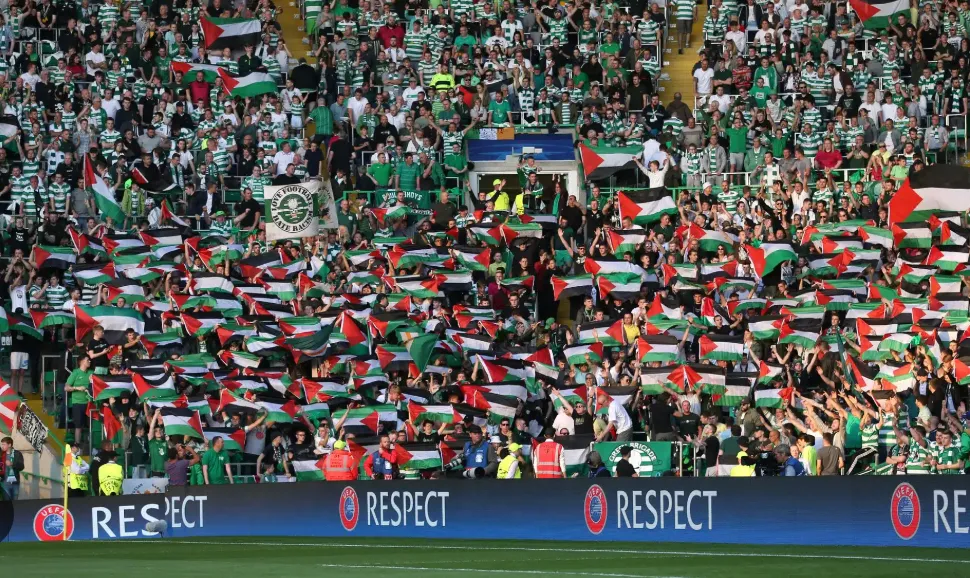
The question remains whether sport can truly be a catalyst for change in this context. Can a banner at a football match, or words of solidarity from athletes, spark a shift in global opinion or put pressure on governments to act? The answer is uncertain, but the need for action is undeniable. The conflict in Gaza and Israel has reached a point where inaction is itself a choice, one that implicitly supports a status quo of violence and disregard for human life.
While the complexities of international politics may complicate direct action, it is essential to recognize that certain truths are clear. The killing of children, the deliberate targeting of civilians, and the perpetuation of famine are wrong, regardless of the political context. In this sense, sport, as a universal language, has the potential to help frame the debate not as one of opposing sides, but as a simple moral question: what is right and what is wrong?
For those advocating for a change in the way sport engages with political issues, the hope is that even small acts of resistance can make a difference. Whether it’s a “Free Palestine” banner at a stadium or an athlete voicing solidarity, these actions contribute to a broader movement that seeks to hold governments accountable and protect innocent lives.
In the end, sport may have a limited role in political and humanitarian issues, but it remains an important tool for raising awareness and sparking discussion. In the face of ongoing violence, it is crucial that sport does not remain silent or neutral but instead takes a stand, however imperfect or blunt, in the pursuit of justice and human dignity.


Leave a Reply