

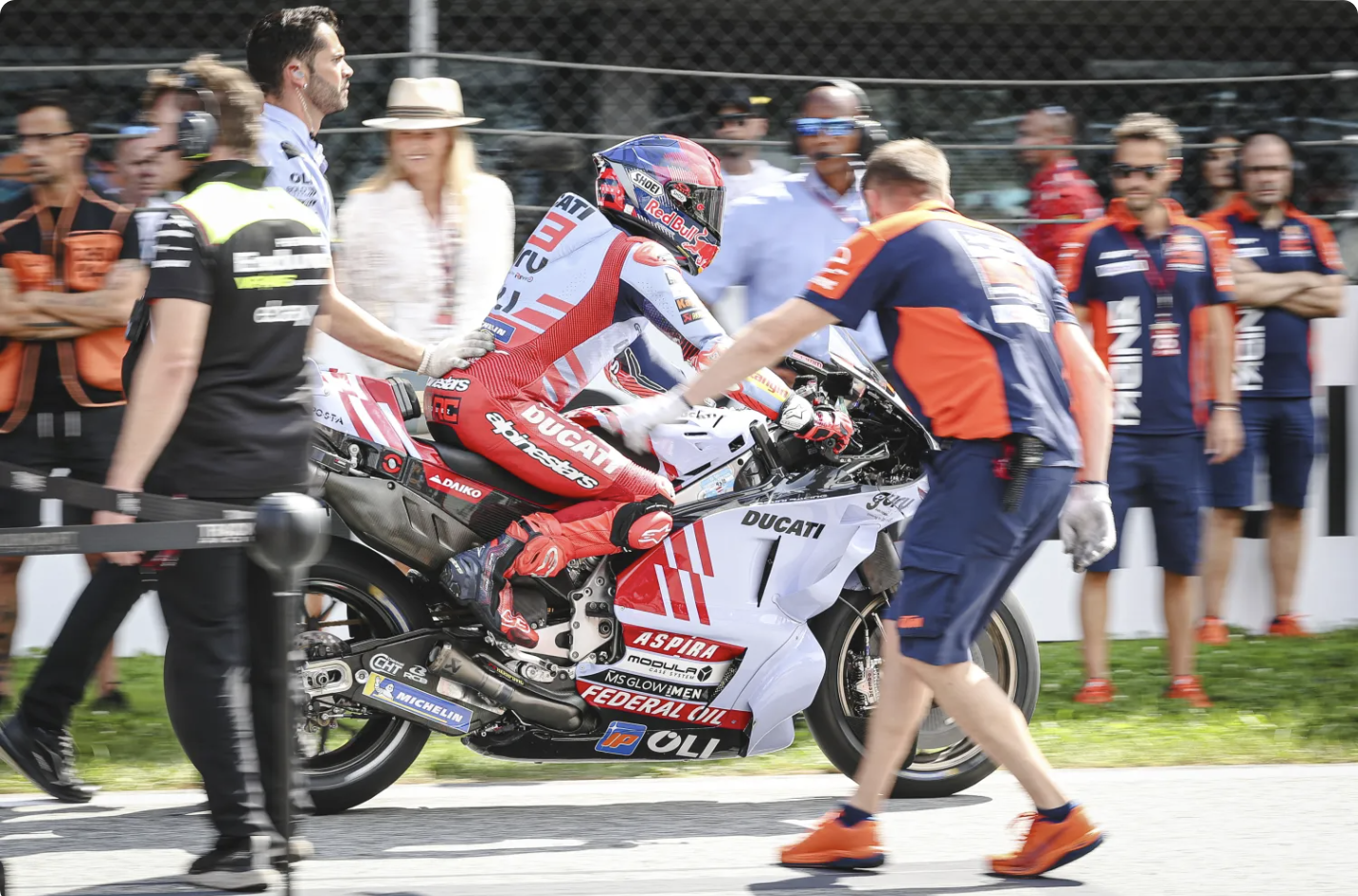
The 2024 Austrian Grand Prix will not be remembered fondly by fans, marked by a lackluster race that failed to capture the excitement typically associated with MotoGP. The event was a stark contrast to memorable past races, raising concerns about the current state of the sport.
A significant part of the criticism has been directed at Ducati’s dominance with their GP24 model. However, historical context reveals that even in eras perceived as less thrilling, there were still classic moments and intense battles. The real issue may lie not with Ducati’s success but with the overall competitiveness of the grid.
The race results reflected a lack of excitement, with the top ten riders finishing within a 30.2-second window—a far cry from the thrilling last-corner duels of past Austrian GPs. Even during the COVID-affected seasons, Austria provided exhilarating races, suggesting that the current issues are not solely due to Ducati’s dominance.
Problems with Ride Height Devices
The 2024 Austrian GP highlighted the limitations and issues associated with the use of ride height devices. Marc Marquez, competing on a 2023-spec Ducati for the Gresini team, experienced one of his better weekends in terms of pace. However, a series of setbacks prevented him from capitalizing on his strong performance.
Marquez’s troubles began with a broken tyre valve, which led to a rushed pit stop and a subsequent issue with his front holeshot device. The device, which helps manage bike height and stability, malfunctioned during the start. Causing Marquez to fall from third on the grid to 13th. Despite recovering to fourth place, Marquez’s issues prevented a potentially thrilling podium battle.
In an interview, Marquez addressed the problems with the ride height device and its impact on the race: “We cannot ban a device [early] because I did a mistake. It’s the same for everybody and in the past other riders have done it also. It’s true that now we have many things [to operate] on the bike. When some riders arrive from Moto2 they say, ‘We have so many things to do.’ But today, with that chaos we had with the front tyre. I put more attention on getting the tyre temperature up and I was less concentrated on the front device.”
Marquez, a long-time critic of the increasing reliance on complex technologies in MotoGP. Believes that ride height devices and other advancements are diminishing the role of rider skill. The layout of the Red Bull Ring, emphasizing low-gear acceleration, further underscores how these devices level the playing field, often resulting in uniform exit strategies from corners.
The current regulations, including ride height devices, have introduced new challenges, such as managing tyre pressures and downforce. Marquez’s start-line issues, exacerbated by the malfunctioning device, underline the potential dangers and competitive disadvantages faced by riders.
Looking Ahead
The introduction of new regulations set to ban ride height devices by 2027 represents a move toward simplifying the sport and emphasizing rider talent. However, the current two-year wait for these changes may mean continued frustrations and less exciting racing.
As MotoGP grapples with these issues, accelerating the ban on ride height devices could be a solution worth considering to enhance race excitement and ensure that rider skill remains at the forefront of competition.
Leave a Reply