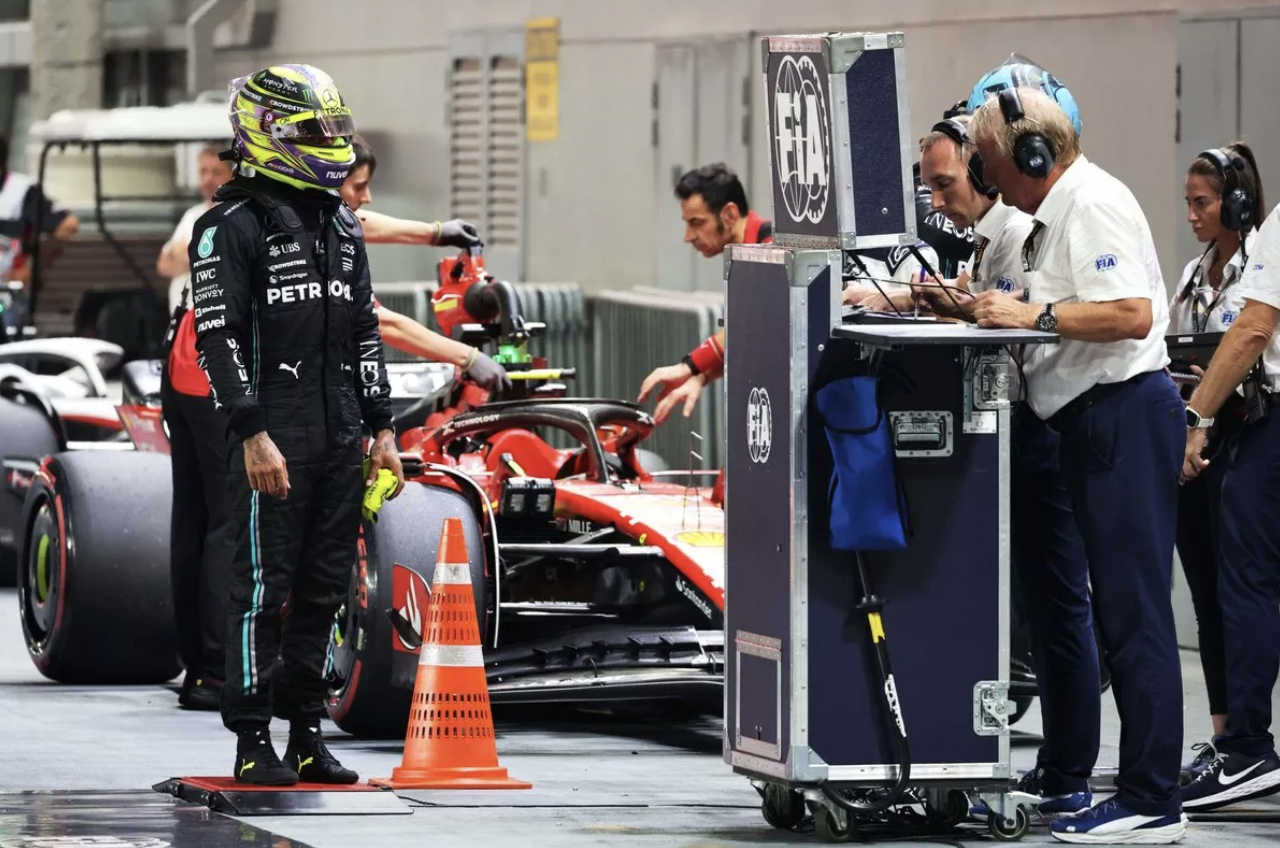
Scrutineering is a pivotal aspect of every Formula 1 Grand Prix, ensuring the compliance of cars with the sport’s regulations throughout race weekends. This rigorous process involves various steps, each serving to uphold the integrity of competition and safety standards.
How Does Scrutineering Work in F1?
- Pre-Event Scrutineering:
- Teams submit declaration forms, affirming compliance with regulations.
- FIA conducts random checks to verify submitted information.
- Introduced in 2019 for efficiency, replacing previous pitlane checks.
- In-Race Scrutineering:
- FIA officials monitor garages during track sessions.
- Laser scans and physical tests ensure compliance with regulations.
- Instances of infractions, like rapid fuel filling, are addressed promptly.
- Post-Race Scrutineering:
- Cars and drivers undergo checks in parc ferme after sessions.
- Minimum weight requirements for both cars and drivers are verified.
- Limited time constraints necessitate random component inspections.

Importance of Driver Weighing
- Weight Requirements:
- Drivers must meet a minimum weight (80kg since 2019) with safety equipment.
- Helps ensure fairness and safety, with ballast added if necessary.
- Fluid Loss Measurement:
- Weighing drivers post-session assesses fluid loss, aiding in recovery planning.
- Loss of 2-3kg during races is common, informing hydration strategies.
Notable Scrutineering Instances
- Disqualifications:
- Renault’s disqualification in 2019 for illegal driver aids.
- Sebastian Vettel’s penalty at the 2021 Hungarian GP due to fuel sample issues.
- Controversial Checks:
- Charles Leclerc and Lewis Hamilton’s disqualification at the 2023 US GP for rear skid block wear.
- Debate arises over selective post-race scrutineering, prompting FIA clarification.

Scrutineering Across Racing Championships
- NASCAR:
- Open scrutineering allows fan and team inspection, promoting transparency.
- World Endurance Championship:
- Similar to F1 with pre-race checks but differs in Le Mans scrutineering.
- City-center inspection event before the Le Mans 24 Hours engages fans and ensures compliance.
In summary, scrutineering in Formula 1 encompasses meticulous technical checks and driver assessments to maintain fairness, safety, and regulatory adherence throughout race weekends. While methods vary across racing championships, the fundamental goal remains consistent: to uphold the integrity and competitiveness of motorsport.
