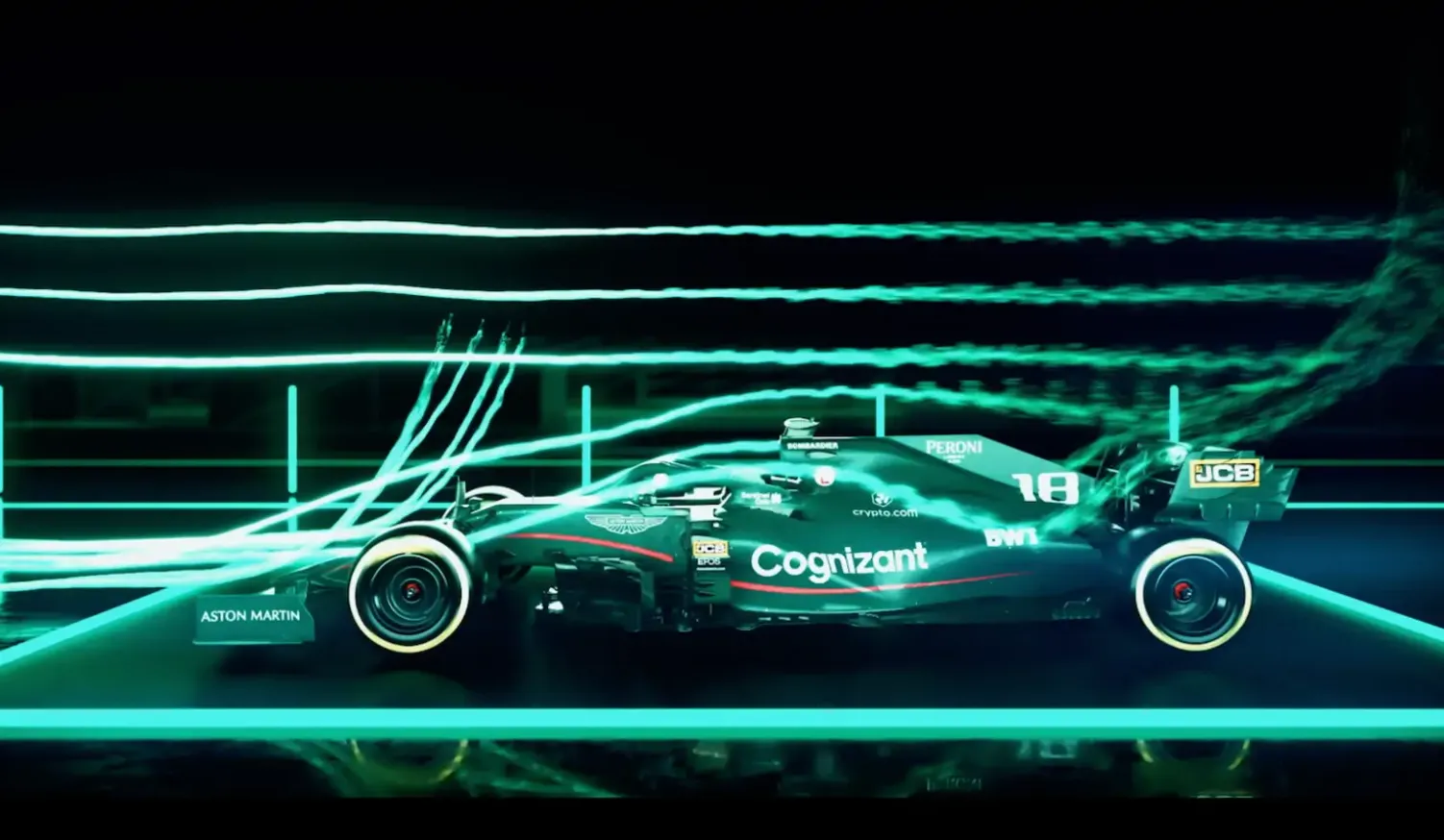
As the competition at the front of F1 intensifies, the ability to introduce effective upgrades without encountering setbacks has become crucial. The contrasting performances of teams like Ferrari, Red Bull, Aston Martin, and Mercedes this season starkly highlight the success of McLaren, which has excelled in developing its MCL38. As teams speculate on why McLaren has thrived while others have stumbled, a compelling theory has emerged: the 2024 season may hinge on who possesses the best wind tunnel.
The connection between McLaren’s impressive performance and its state-of-the-art wind tunnel has not been dismissed by paddock insiders as mere coincidence. Red Bull, in particular, is actively investigating why its RB20 development has faltered, increasingly suspecting that issues stem from its aging Bedford wind tunnel, originally constructed during the Cold War.
After the Italian Grand Prix, Red Bull boss Christian Horner acknowledged the team’s struggles: “It’s disconnected front and rear. And we can see that. Our wind tunnel doesn’t say that, but the track says that.” When the wind tunnel provides inaccurate data, teams face a significant challenge, as they rely on this information to determine the efficacy of new components.
“It’s not unusual that when something’s not working on the car, you end up with different readings from your simulation tools, and they don’t converge,” Horner explained. “You get three sets of data: CFD, wind tunnel, and track. Obviously, the one that really counts is the track data, but to develop it, it’s like telling the time with three different watches.”
The current circumstances have Red Bull eagerly anticipating the completion of its cutting-edge wind tunnel at its Milton Keynes base.
The Importance of Accurate Data
For teams at the pinnacle of F1, success hinges not just on avoiding erroneous data but on producing superior data compared to competitors. With ground-effect cars being exceptionally sensitive to ride height and under-floor aerodynamics, having precise readings that correlate closely with real-world conditions significantly enhances a team’s ability to develop its car effectively.

This pursuit of superior data has led teams like Ferrari to implement key improvements in their wind tunnels. After shutting down its facility for several weeks over the summer for upgrades, Ferrari focused on better yaw angle simulation to mimic airflow during cornering. With cars generating downforce while navigating turns, replicating real-world dynamics in wind tunnels is essential.
In addition to improving yaw simulation, Ferrari reportedly undertook a comprehensive revamp of its rolling floor. The traditional smooth metal surfaces have been replaced with rougher, rubber-like materials that more accurately simulate the disrupted airflow generated by actual race tracks. Senior team figures noted that every imperfection in the track surface contributes to creating vortices beneath the car, crucial for achieving optimal performance.
Some teams have even begun exploring advanced techniques, such as 3D printing rolling road surfaces to replicate the unique characteristics of different tracks on the calendar.
Advancements in Wind Tunnel Technology
The latest wind tunnels also incorporate better measuring technology, a significant area where teams can gain an edge. Aston Martin’s engineering director, Luca Furbatto, emphasized that McLaren benefits from advanced sensors that enhance flow visualization and provide precise feedback during testing. “If I’m not wrong, the last wind tunnel developed in F1 was 20 years ago,” Furbatto noted. “So imagine the technological changes. Today, it’s possible to scan the flows in different areas of the car, offering insights that were previously unimaginable.”
With Aston Martin eagerly anticipating its new wind tunnel in time for the development of its 2026 car, it’s evident that teams see considerable potential in these advancements.
The Human Element

The significant investment in modern wind tunnels reflects the high stakes of competitive racing. Ferrari’s decision to shut down its facility mid-season for upgrades underscores the importance of staying ahead. While the technology of McLaren’s new wind tunnel remains largely under wraps, team boss Andrea Stella acknowledges that it plays a crucial role in their current success. However, he emphasizes that it’s not the sole factor; the human element is equally vital.
“The evolution of these cars has led to challenges in physics, and that’s where teams, including McLaren, have struggled to generate developments easily,” Stella explained. “But more than the wind tunnel, if we have a competitive car on track, it’s a testament to the entire aerodynamic team. A tool is only as good as the people who use it.”
In conclusion, the ongoing battle in F1 may indeed hinge on the effectiveness of wind tunnel technology and the quality of data produced. As teams invest in state-of-the-art facilities and refine their approaches to aerodynamics, the importance of both advanced technology and skilled human interpretation will remain central to success on the racetrack.
