
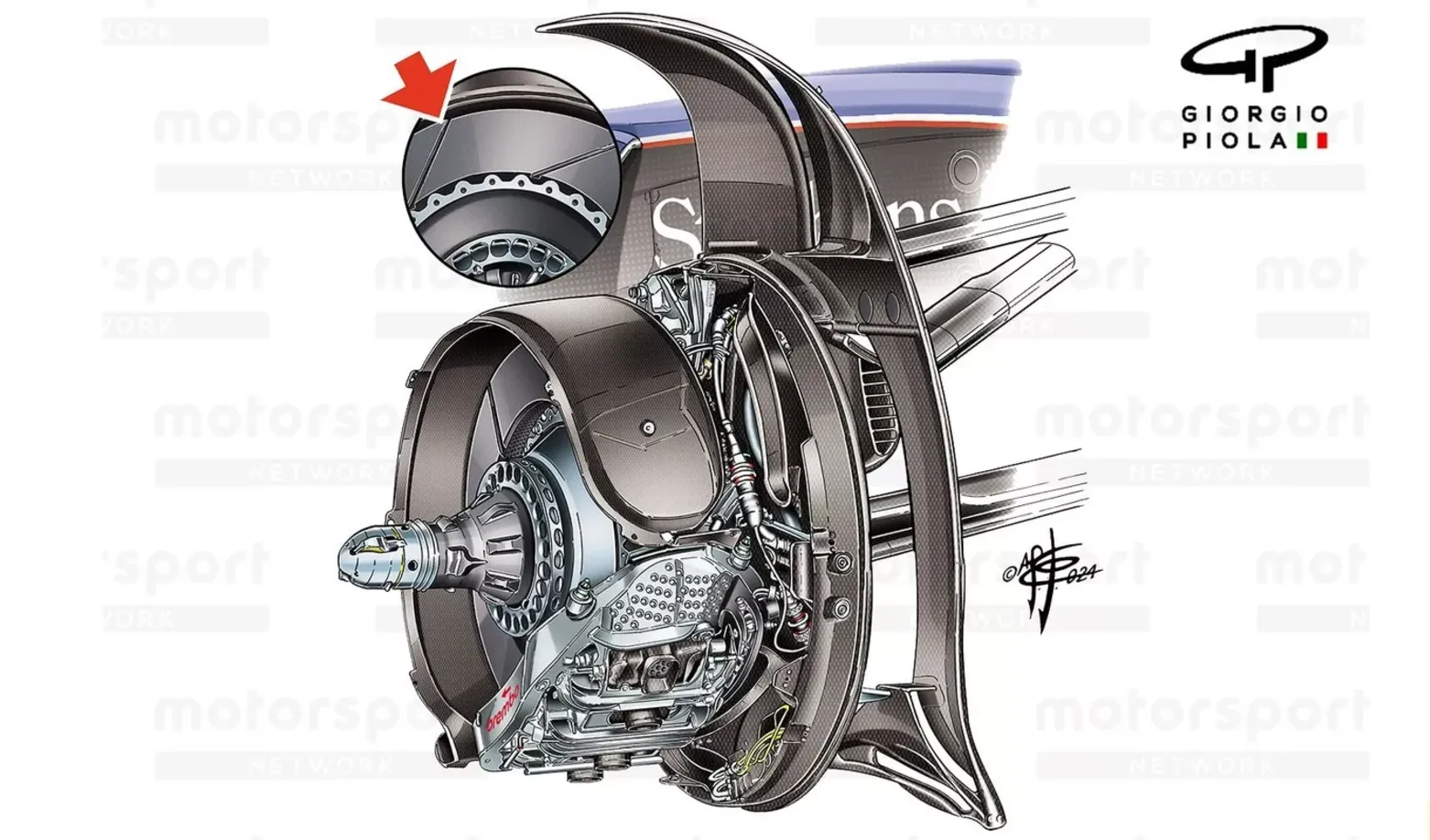
In Formula 1, as regulations evolve, teams often revisit past innovations, bringing back concepts that may have once fallen out of favor but could now offer performance benefits. The latest such innovation is the reintroduction of grooves on brake disc rotors, a design previously seen when steel brake discs were used in the sport.
Carbone Industries, a key brake disc supplier in F1, has been trialing grooved brake discs at recent races. Williams began experimenting with the concept during the Italian Grand Prix, followed by Alpine testing similar solutions at the Mexican Grand Prix. While these experiments may not offer immediate performance gains this season, they are likely part of a long-term strategy to prepare for the 2025 season.
The purpose of these early tests is to assess how the grooved design affects brake performance and heat management, with the teams supplied by Carbone Industries—accounting for more than half the grid—getting valuable time to optimize their braking systems and integrate the new designs into their overall package. The tests will also help fine-tune the brake duct and cooling systems, crucial for ensuring optimal performance.
Grooved brake discs, which first appeared in F1 with steel discs, are believed to help improve the initial “bite” when the brakes are applied. This could provide drivers with better feel and control when braking, as well as enhance heat transfer through the assembly. The number, length, shape, and depth of the grooves could vary between teams, potentially leading to different performance outcomes.
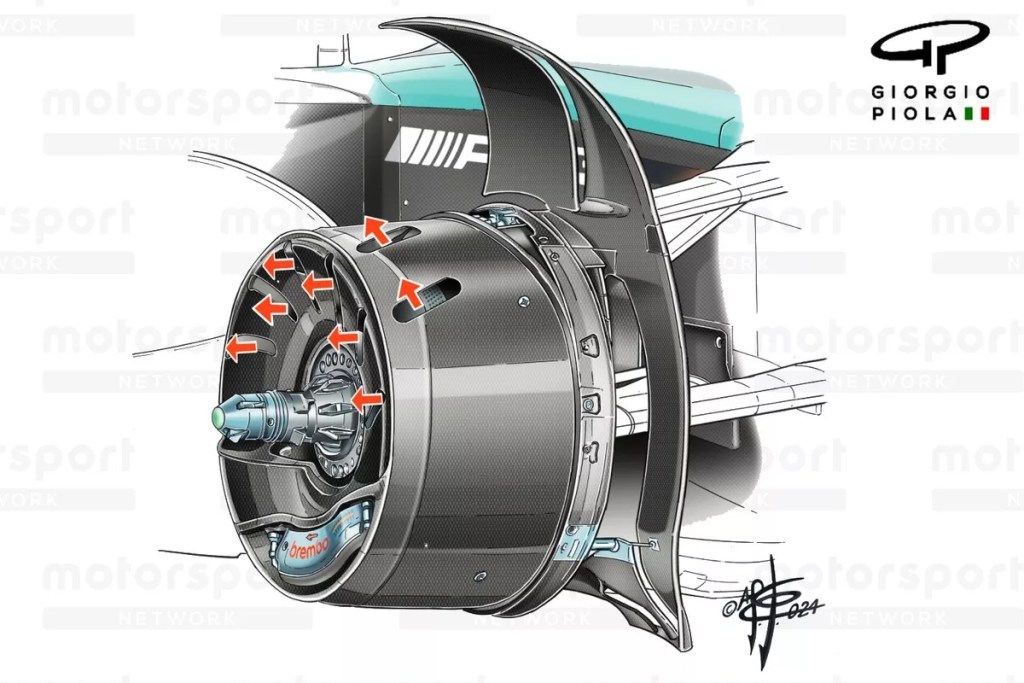

The shift to 18-inch tyres in recent years has already required teams to redesign their brake assemblies to accommodate the larger wheel size. Along with this, changes to prevent brake drums and wheels from contributing to aerodynamic outwash have led to a wave of innovations aimed at improving cooling and heat management. Disc fairings, for example, have evolved over time to direct airflow more effectively, while teams have worked on more intricate brake drum designs to help direct air and heat around the assembly.
The reintroduction of grooved discs is primarily seen as a way to enhance braking performance, particularly in terms of providing quicker and more effective heat dissipation. If these recent trials prove successful, it’s likely that other teams will adopt similar solutions, potentially leading to further refinements in brake assemblies.
Not to be outdone, Brembo, another major brake supplier in F1, will be closely monitoring the outcomes of these tests and considering how grooved discs might fit into their offerings for 2025 and beyond. As the sport continues to push the boundaries of performance, the return of grooved brake discs could become a key part of the technological evolution in Formula 1.