

This season, MotoGP riders have been grappling with tire spin during practice starts, a phenomenon closely linked to the use of front holeshot devices. The connection became particularly apparent at the recent Thai Grand Prix, where riders faced high tire spin even on a dirty track surface, largely due to the lowering of the front end.
KTM’s Jack Miller explained after a Friday practice burnout that the “110” holeshot device, which aggressively lowers the bike’s front end, led to immediate rear tire spin. “I’m not a big fan of the 110 device, as soon as you put the bike down that low on the front, the rear starts spinning almost immediately,” Miller shared.
Buriram, which also hosted the season’s first wet grand prix, highlighted riders’ varied approaches to the holeshot device. Some, like Ducati’s Enea Bastianini, chose not to activate the device to prioritize initial rear grip. However, Bastianini later observed that riders who did engage the front device had a more competitive start, revealing the device’s impact under different track conditions.
On high-grip tracks, maximizing the lowering of both the front and rear is crucial, as wheelies are the primary limitation to performance. However, on lower-grip or wet surfaces, where traction becomes the limiting factor, minimizing weight transfer onto the rear tire becomes essential. The newer GP24 Ducatis, for example, can lower significantly more than the older GP23 models, underscoring differences in equipment across the grid.
Miller confirmed at Sepang that KTM has various stroke lengths for its front holeshot device to suit differing track grip levels, with four options ranging from 80 to 110 mm. “In high-grip conditions, you jam the thing down like a drag racer,” Miller said. “But in lower grip, you want more weight on the rear, so you go with the 80 or 90.”
This range of options allows riders to test and optimize settings based on the grid’s dirtiest areas, aiming to manage rear tire grip during launches. The tuning challenge also explains why Ducati’s title leaders, Jorge Martin and Francesco Bagnaia, may struggle with practice starts but often excel on race day.
In addition to front holeshot adjustments, Miller noted an update to his rear ride-height device. This modification, implemented on long straights, aids in controlling rear tire load, reducing the “pumping” effect often seen when the tire struggles with traction on exit. “It’s helping us avoid overloading the tire, and it feels smoother on the straights,” Miller added.
Brad Binder, Miller’s teammate, emphasized the performance gains holeshot devices bring to MotoGP, likening the bikes’ launches to those of dragsters. “With these devices, you’re cutting half-a-second from 0-100 km/h,” Binder told Crash.net. “It’s crazy how much progress we’ve made.”
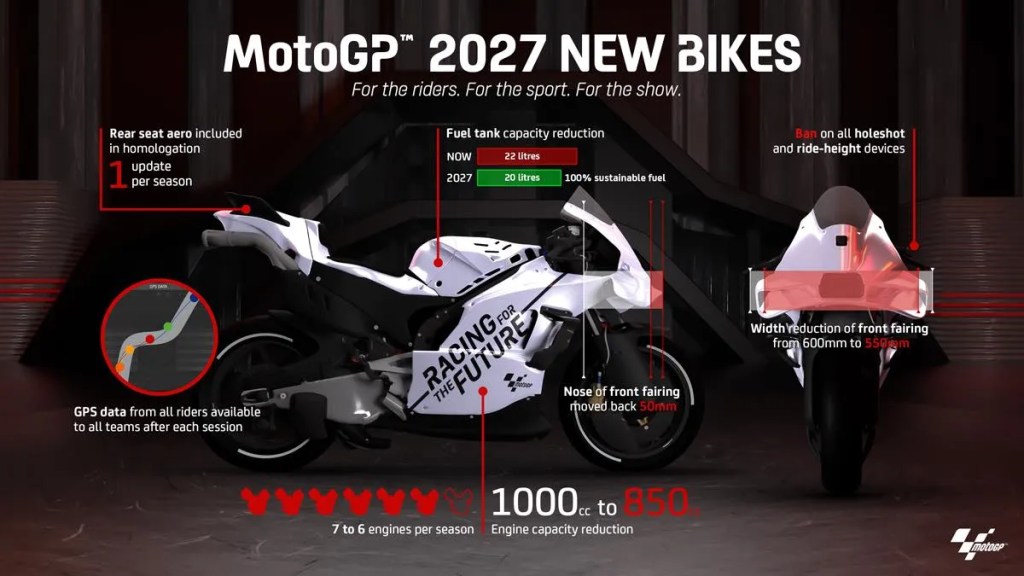
However, MotoGP’s reliance on these devices will soon end. Starting in 2027, all holeshot and ride-height devices will be banned under new technical regulations. Though Binder acknowledged he’ll miss the extra power and control they offer, he’s hopeful that a uniform ban will level the playing field.
As MotoGP prepares to transition to new rules, teams and riders will aim to make the most of these devices while they remain legal. McLaren has demonstrated that even subtle adjustments can yield significant advantages, providing a thrilling glimpse into the level of technical skill and strategy that defines MotoGP racing.