

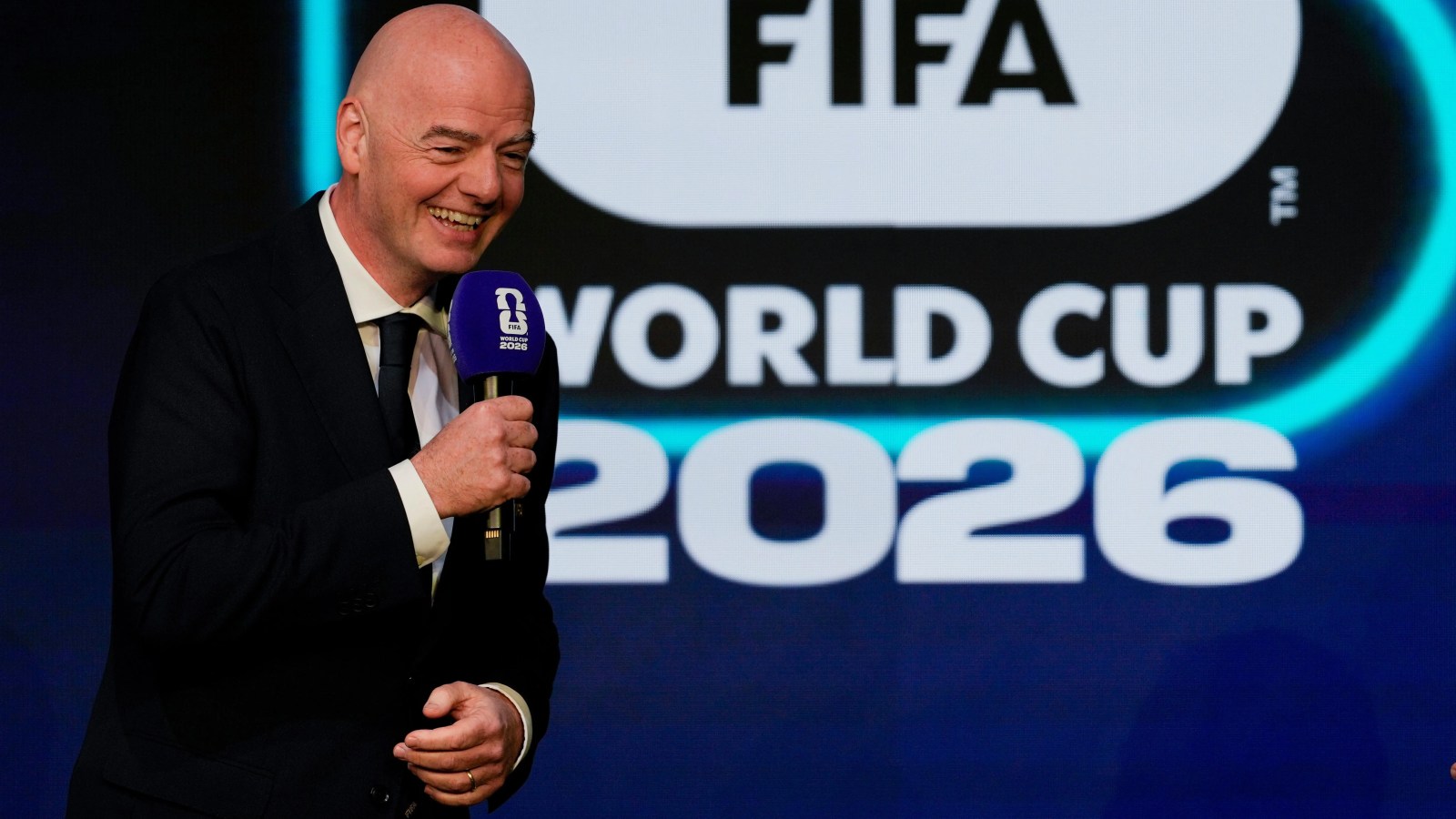
The Football Association of Ireland has withdrawn its support for Gianni Infantino’s re-election as FIFA president, a significant development in the politics surrounding the 2026 World Cup cycle and the wider governance of the global game. The move matters because it places the FAI within a broader European shift away from Infantino at a time when continental unity remains central to FIFA’s balance of power. With other national associations also moving in the same direction, the defining element in this story is not an on-field performance but the growing momentum of opposition within Europe. In the context of World Cup 2026, the significance lies in how football’s political landscape may shape decision-making, relations between FIFA and UEFA, and the atmosphere around the tournament’s build-up.
- The Football Association of Ireland has withdrawn its support for Gianni Infantino to be re-elected as FIFA president.
- A wider movement is developing among European associations, with Wales, England, Finland and Serbia also reported to have dropped support for Infantino.
- UEFA’s boycott stance remains in place, with the conditions to lift it not met.
- The available verified information does not clearly confirm that the Irish Football Association has backed UEFA’s stance.
Why the FAI decision matters
The FAI’s withdrawal is significant because national federations are not merely administrative bodies working in the background; they are voting members whose positions help shape the direction of world football. When an association changes course on a FIFA presidential re-election bid, it signals dissatisfaction strong enough to move from private concern to a public political stance. In the context of the 2026 World Cup, that shift adds another layer to the tournament narrative, because the competition is not only about qualification, squads and host preparations. It is also unfolding against a backdrop of institutional tension that could influence how football’s major stakeholders work together in the years leading up to the finals.
Ireland’s move also carries symbolic weight. European federations have often sought to present a coordinated front when major governance questions arise, and every additional association that withdraws support from an incumbent strengthens the impression of a widening divide. That does not automatically determine an election outcome, but it does change the conversation around legitimacy, confidence and leadership. For FIFA, any erosion of support within Europe matters because UEFA remains one of the most powerful confederations in the sport, both politically and commercially, and visible dissent from its member associations is difficult to dismiss.
The decision also underlines how governance issues can become part of the wider football calendar rather than remain separate from it. As the World Cup cycle progresses, political disagreements at the top of the game can affect the tone of meetings, the quality of cooperation and the broader climate in which major decisions are made. The FAI’s position therefore matters not only as an isolated act, but as part of a larger contest over influence and direction at a critical point in the sport’s global cycle.
European pressure and the wider World Cup backdrop
The broader pattern is what gives the FAI decision its real weight. Wales, England, Finland and Serbia have also been reported to have dropped support for Infantino, indicating that this is not an isolated act but part of a wider European movement. That collective trend is more consequential than any single federation acting alone, because it suggests shared frustration rather than a local disagreement. In practical terms, it means the debate around FIFA’s leadership is becoming part of the wider World Cup 2026 environment, with political alignment now sitting alongside the usual sporting concerns of qualification campaigns, tournament planning and international scheduling.
UEFA’s boycott stance remaining in place is another central part of the picture. The conditions required to lift that stance have not been met, which means the underlying dispute has not been resolved and the relationship between the continental body and FIFA remains under strain. For the 2026 World Cup cycle, that matters because football’s biggest tournament depends on smooth coordination across federations, confederations and governing institutions. Even when the sporting calendar continues as normal, unresolved governance tensions can shape meetings, negotiations and the tone of international football diplomacy.
There is also an important distinction between what is verified and what remains uncertain. The available evidence clearly supports the FAI’s withdrawal and the continued existence of a wider European push away from Infantino, but it does not clearly confirm that the Irish Football Association has backed UEFA’s stance. That caution matters in a story like this because football politics often moves quickly and claims can spread faster than formal confirmation. Sticking to what is established gives the clearest picture: the FAI has acted, other European associations have also moved, and UEFA’s boycott position still stands.
From a World Cup perspective, this kind of administrative conflict can seem distant from the pitch, but it often casts a long shadow. The 2026 tournament is set to be one of the defining events of the modern era, and the build-up to it will involve not only sporting preparation but also debates over governance, representation and the direction of the game. When several European associations withdraw support from the FIFA president, they are effectively arguing that the leadership question cannot be separated from the sport’s future. That gives the issue relevance far beyond election mechanics, because it touches on how the game’s most influential bodies want football to be run during a World Cup cycle of enormous scale and visibility.
For Ireland specifically, the decision places the FAI in a more assertive position within the European conversation. It signals a willingness to align with a tougher stance rather than maintain passive support, and that could shape how the association is viewed by both allies and opponents in future governance debates. At the same time, the absence of clear verification around the IFA means the all-island picture should not be overstated. What can be said with confidence is that the FAI has taken a definitive step, and that step contributes to a broader continental challenge at a sensitive moment for FIFA.
What happens next will depend on whether this European resistance hardens further or begins to fragment as the 2026 World Cup moves closer. If more associations withdraw support, the political pressure around FIFA’s leadership will intensify and the debate may become an even larger part of the tournament’s build-up. If the current positions hold, the story will remain one of unresolved tension between FIFA and sections of Europe, with UEFA’s boycott stance still a defining marker. For now, the clearest development is that the FAI has made its move, and in the politics surrounding World Cup 2026, that is a meaningful shift.
Leave a Reply