

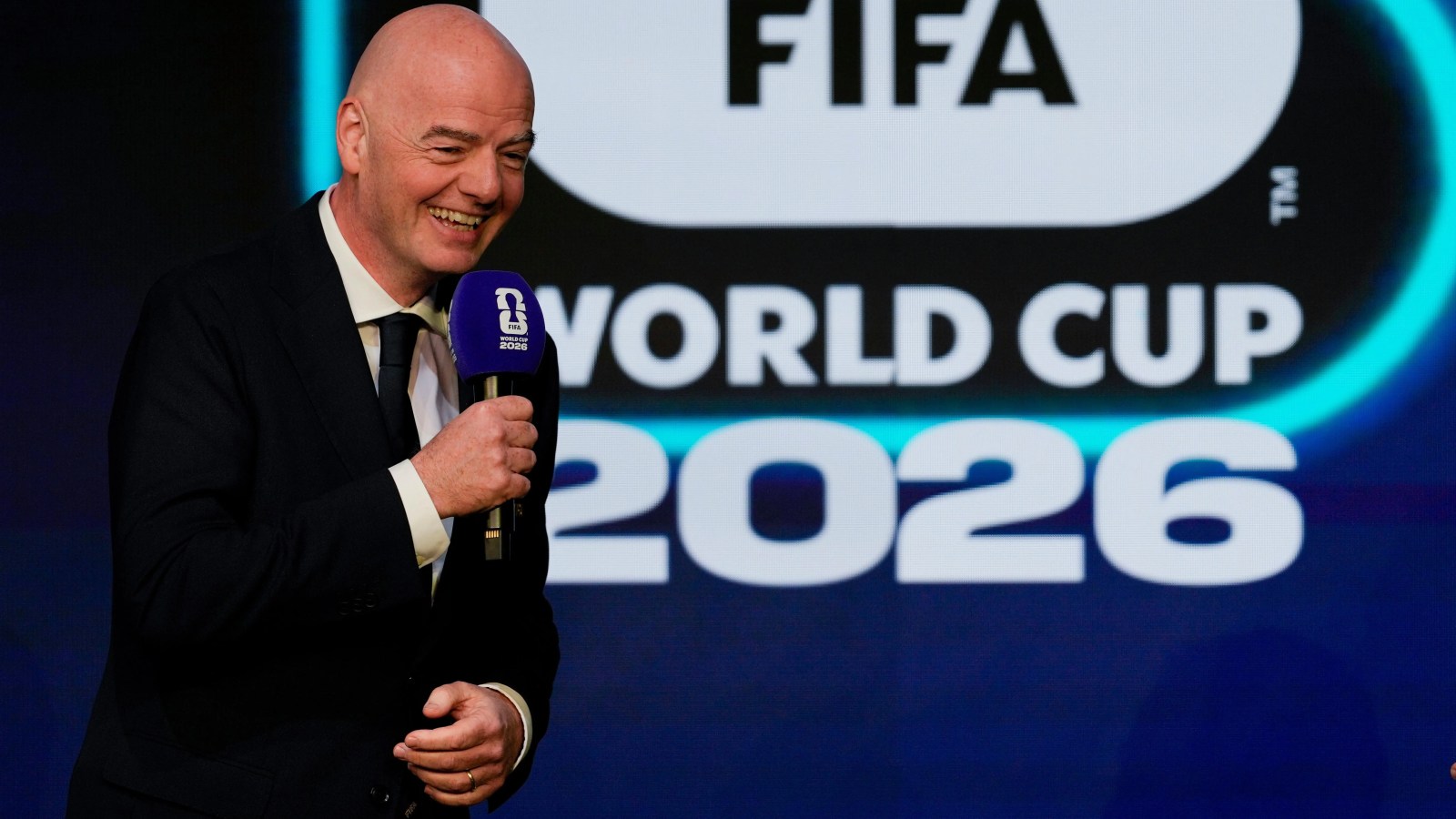
Gianni Infantino is facing mounting criticism during the 2026 World Cup, and the pressure on FIFA’s president has become one of the tournament’s defining off-field storylines. Infantino has responded publicly, accusing his critics of spreading hate, false rumors and false narratives about the competition as scrutiny intensifies on several fronts. The significance of the dispute extends well beyond image management, because it now touches on governance, accountability and the political authority surrounding football’s biggest event. With pressure also building from Europe, the controversy has become a serious test of leadership at a moment when the World Cup is meant to serve as the game’s global showcase.
- Gianni Infantino has publicly pushed back against criticism during the 2026 World Cup, accusing detractors of spreading hate, false rumors and false narratives.
- Pressure has intensified from Europe, with 72 EU lawmakers demanding an investigation into FIFA’s president.
- UEFA has warned FIFA that it may take legal action over an abandoned World Cup investment proposal.
- UEFA has also told Infantino to preserve documents linked to that abandoned proposal.
- There is no verified basis in the provided research to state that FIFA formally defended Infantino over allegations tied to his time at UEFA.
Escalating scrutiny at the heart of the tournament
The timing of the dispute is especially striking because the World Cup usually concentrates attention on performances on the pitch, tactical trends and the race for the trophy. Instead, Infantino’s position has become a major talking point during the tournament itself, creating an uncomfortable overlap between football’s celebratory stage and the sport’s internal power struggles. His decision to answer critics directly shows that the pressure has become too visible to ignore. By framing the criticism as hate, false rumors and false narratives, he has chosen a confrontational response rather than a quieter attempt to let the tournament drown out the noise.
That approach matters because public rebuttals can shape how the wider football world interprets the controversy. A forceful denial may reassure supporters who see the criticism as politically motivated or exaggerated, but it can also deepen divisions if opponents believe serious questions remain unanswered. In a World Cup environment, every statement lands with amplified force because the audience is global and the stakes are reputational as well as institutional. As a result, this is no longer merely an internal governance issue; it has become part of the broader narrative surrounding the tournament. For FIFA, that is an unwelcome shift because the focus moves away from spectacle and competition and toward transparency and trust.
The broader problem for FIFA is that the World Cup offers no shelter from a controversy once it reaches this level of visibility. The tournament magnifies everything: praise, criticism and institutional tension alike. What might otherwise have remained a dispute confined to football politics is now unfolding in full view of a global audience. That visibility raises the stakes for every response, every denial and every fresh development. It also increases the pressure on FIFA to show that its leadership can withstand scrutiny without allowing the event itself to be overshadowed.
European pressure gives the issue greater weight
The criticism has gained added significance because it is not limited to isolated voices. The demand from 72 EU lawmakers for an investigation into FIFA’s president gives the issue a more formal and political dimension, raising the level of seriousness around the concerns now being aired. When elected officials intervene in this way, the story moves beyond football debate and into the realm of public accountability. That does not determine any outcome on its own, but it does increase the pressure on FIFA’s leadership at a time when the organization would prefer stability and control.
UEFA’s position adds another powerful layer. The warning that legal action may follow, combined with the instruction to preserve documents linked to an abandoned World Cup investment proposal, suggests this is not merely rhetorical sparring between football authorities. Requests to preserve documents are significant because they point to concerns over records, process and the need to retain material that could become important in any future dispute. Even without further verified detail on the abandoned proposal itself, the implication is clear: this is a matter with potential legal and administrative consequences, not just a public relations battle. That changes the tone of the entire episode and makes it harder for FIFA to dismiss the criticism as background noise.
There is also an important distinction in what can and cannot be stated from the verified material. The available reporting supports that Infantino has pushed back publicly, that criticism is mounting, that EU lawmakers want an investigation, and that UEFA has raised the prospect of legal action while calling for document preservation. It does not verify any claim that FIFA formally defended Infantino against allegations tied to his time at UEFA. That absence is meaningful in itself, because it limits how the current institutional response can be characterized. In a story shaped by contested narratives, precision matters, and the verified picture is one of a president defending himself publicly while external pressure continues to build.
From a broader World Cup perspective, the controversy underscores how modern football tournaments are judged on more than what happens inside stadiums. Leadership, governance and credibility now sit alongside sporting excellence as part of an event’s overall legacy. If the criticism continues to escalate, it risks overshadowing parts of the competition and complicating FIFA’s efforts to project unity during its flagship event. For Infantino personally, the challenge is not only to reject what he describes as false narratives, but also to prevent the dispute from becoming the dominant off-field story of the 2026 World Cup. For UEFA and the European political figures now involved, the next steps will determine whether this remains a war of words or develops into a more formal confrontation with lasting consequences.
What happens next is likely to depend on whether the pressure from Europe intensifies further and whether FIFA’s leadership can contain the fallout while the tournament continues. Infantino has made clear that he intends to fight back publicly, but the combination of political demands, possible legal action and document-preservation warnings means the issue is unlikely to fade quickly. As the World Cup moves forward, the action on the field will continue to command global attention, yet this governance battle may remain one of the event’s most consequential parallel stories. The coming days will show whether FIFA can restore the focus to football or whether scrutiny of its president deepens even further.
Leave a Reply