

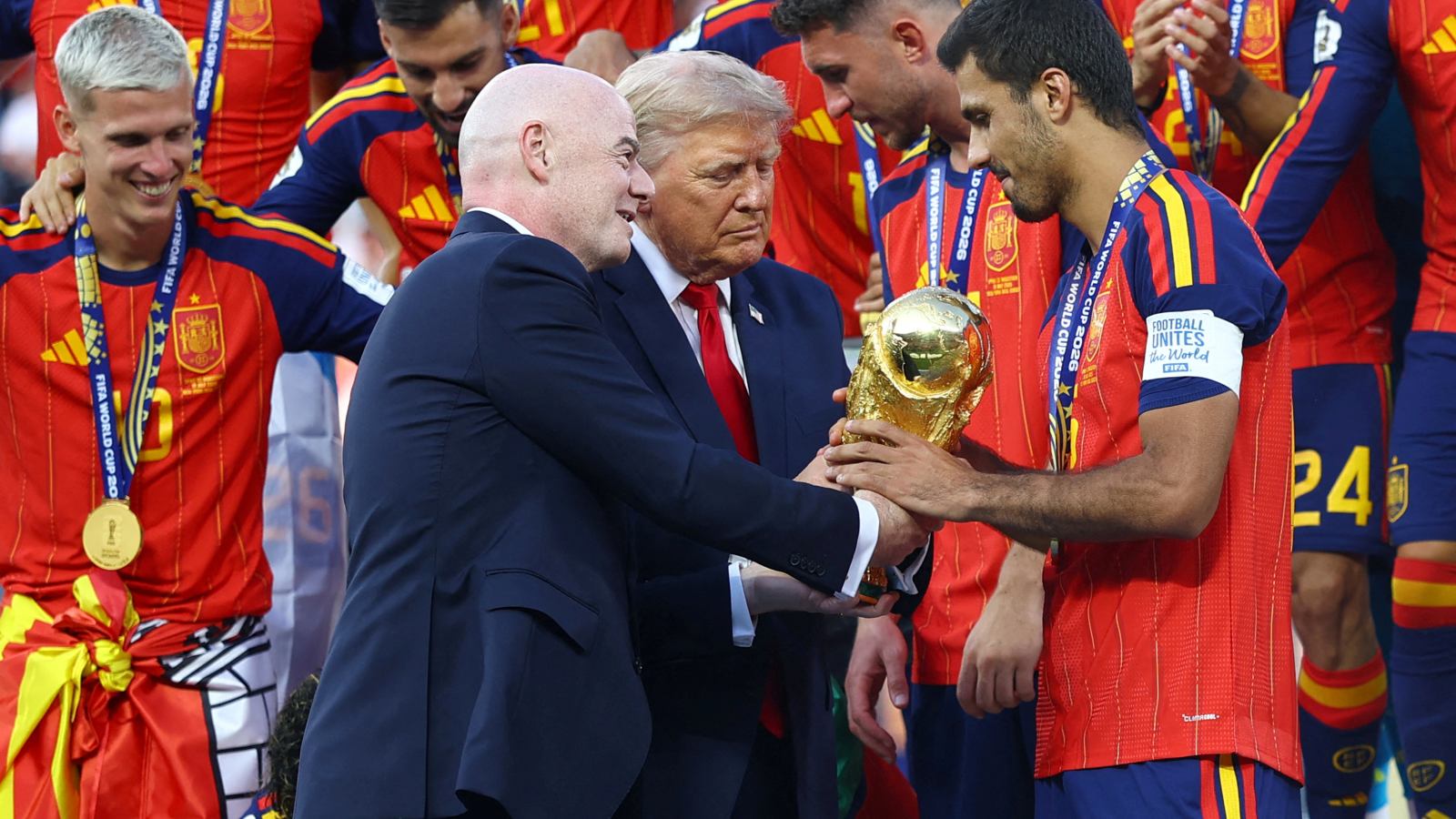
Gianni Infantino heads into a meeting with FIFA executives under mounting pressure as scrutiny intensifies over the 2026 World Cup and wider questions about FIFA governance. The immediate flashpoints are both practical and political: visa and ticketing problems on the eve of the tournament, criticism of officiating, and broader concern over political influence around the competition. Infantino’s public response, telling journalists to “chill” and “relax,” has only sharpened focus on whether FIFA has fully grasped the seriousness of the issues being raised. At the same time, internal tensions have deepened after FIFA’s chief operating officer strongly criticized a plan to sell stakes in competitions to private investors, saying staff had been “deceived” by the proposals.
- Gianni Infantino is facing scrutiny ahead of a meeting with FIFA executives over 2026 World Cup-related concerns and FIFA governance issues.
- He was challenged publicly over visa and ticketing problems on the eve of the tournament after telling journalists to “chill” and “relax.”
- Criticism has also centered on officiating and concerns over political influence around the tournament.
- FIFA’s chief operating officer strongly criticized plans to sell stakes in competitions to private investors and said staff had been “deceived.”
- Specific tournament access concerns include a referee being denied entry to the United States and an Iraq striker being held for several hours at an airport.
Mounting pressure before a key FIFA meeting
The convergence of these issues matters because they cut across the three areas that shape confidence in any World Cup: operational readiness, sporting integrity and institutional leadership. Visa and ticketing problems strike at the most basic promise of a global tournament, namely that players, officials and supporters can reach venues and take part without avoidable disruption. When those concerns are accompanied by criticism of officiating, the conversation quickly moves from logistics to trust in the competition itself. Add concerns over political influence and the debate widens further, raising questions about whether FIFA is adequately shielding the tournament from pressures that can distort both perception and reality.
Infantino’s remarks urging journalists to “chill” and “relax” have become a focal point because tone matters in moments of uncertainty. Administrators are judged not only on the substance of their answers but also on whether they appear responsive to legitimate concerns. In this case, the criticism was already concrete, centered on access and ticketing problems on the eve of the tournament rather than abstract dissatisfaction. That made the response appear dismissive to some, particularly when the practical consequences of travel disruption can affect competitive preparation, staffing and the supporter experience. A World Cup is too large and too visible for any point of friction to remain isolated for long, and the public challenge reflected that reality.
The travel and access concerns highlighted around the tournament give those broader complaints a human dimension. A referee being denied entry to the United States is not a minor inconvenience in the context of a major international competition; it raises immediate questions about contingency planning, accreditation coordination and the resilience of tournament operations. Likewise, an Iraq striker being held for several hours at an airport illustrates how border and entry issues can intrude directly on a team’s preparation. Even without further detail, those incidents underline a central point: tournament planning is judged where policy meets the individual. If participants and officials encounter uncertainty at that stage, confidence in the wider system inevitably suffers.
Governance questions deepen the sense of instability
The governance dimension makes the situation more significant than a routine pre-tournament dispute. FIFA’s chief operating officer strongly criticizing Infantino’s plan to sell stakes in competitions to private investors, and saying staff had been “deceived,” points to internal disquiet at a high level. That language suggests disagreement not merely over strategy but over process and transparency. For an organization responsible for the world’s biggest football event, internal confidence is not a side issue; it affects how decisively and credibly problems can be addressed. When operational concerns outside the boardroom coincide with accusations of deception inside it, the pressure on leadership intensifies quickly.
There is also a deeper tension in the idea of selling stakes in competitions to private investors. Football’s major tournaments derive their value from sporting legitimacy, global reach and long-term stewardship, so any proposal touching ownership or commercial participation naturally invites scrutiny. Even without additional financial detail, the criticism from FIFA’s chief operating officer indicates concern about how such plans were presented and what they could mean for the organization’s direction. That matters in the 2026 World Cup context because governance debates are rarely sealed off from tournament management. If stakeholders sense uncertainty about decision-making at the top, every operational problem below becomes more politically charged.
Criticism of officiating adds another layer because it goes to the heart of competitive credibility. At any World Cup, refereeing decisions are examined intensely, but concern over officiating becomes more damaging when it arrives alongside complaints about access, logistics and political influence. In that environment, isolated refereeing debates can be interpreted as part of a larger pattern rather than as the ordinary friction of elite sport. FIFA therefore faces a dual challenge: ensuring that officiating standards are defended on their own terms while also preventing the wider atmosphere from eroding trust. The mention of a referee being denied entry only sharpens that dilemma, because it links administrative access directly to the officiating conversation.
Concerns over political influence around the tournament are especially sensitive because they touch on FIFA’s repeated emphasis on football’s global independence and neutrality. A World Cup inevitably sits at the intersection of sport, state policy and international movement, particularly when travel and entry rules are involved. That does not mean every disruption is political, but once such concerns are raised publicly, FIFA must show that sporting priorities are not being compromised by forces beyond the field. The challenge for Infantino is that these issues do not exist in separate compartments. Ticketing problems affect supporters, visa problems affect participants, officiating concerns affect competitive trust, and governance disputes affect the credibility of every response offered by leadership.
The overall picture is of a governing body being asked to prove it can manage both the spectacle and the system behind it. The 2026 World Cup will not be judged solely by what happens during matches; it will also be judged by whether the pathways into the tournament are fair, functional and professionally managed. Public criticism, internal dissent and specific access incidents have combined to create a moment that feels larger than a normal administrative storm. Even without a single defining scandal, the accumulation of issues has created a significant test of authority for Infantino. The importance of the coming executive discussions lies in whether FIFA can turn that accumulation into a coherent response rather than allowing each problem to reinforce the next.
What comes next is crucial for both the tournament and FIFA’s leadership. The meeting with FIFA executives now carries added weight because it offers the clearest immediate opportunity to address concerns over visas, ticketing, officiating, political influence and internal governance. Infantino will need to show that the organization can respond with greater clarity and control than his “chill” and “relax” remarks suggested. For FIFA, the task is not only to quiet the noise around the 2026 World Cup but to restore confidence that practical access, sporting integrity and institutional decision-making are being handled with the seriousness an event of this scale demands.

Leave a Reply