

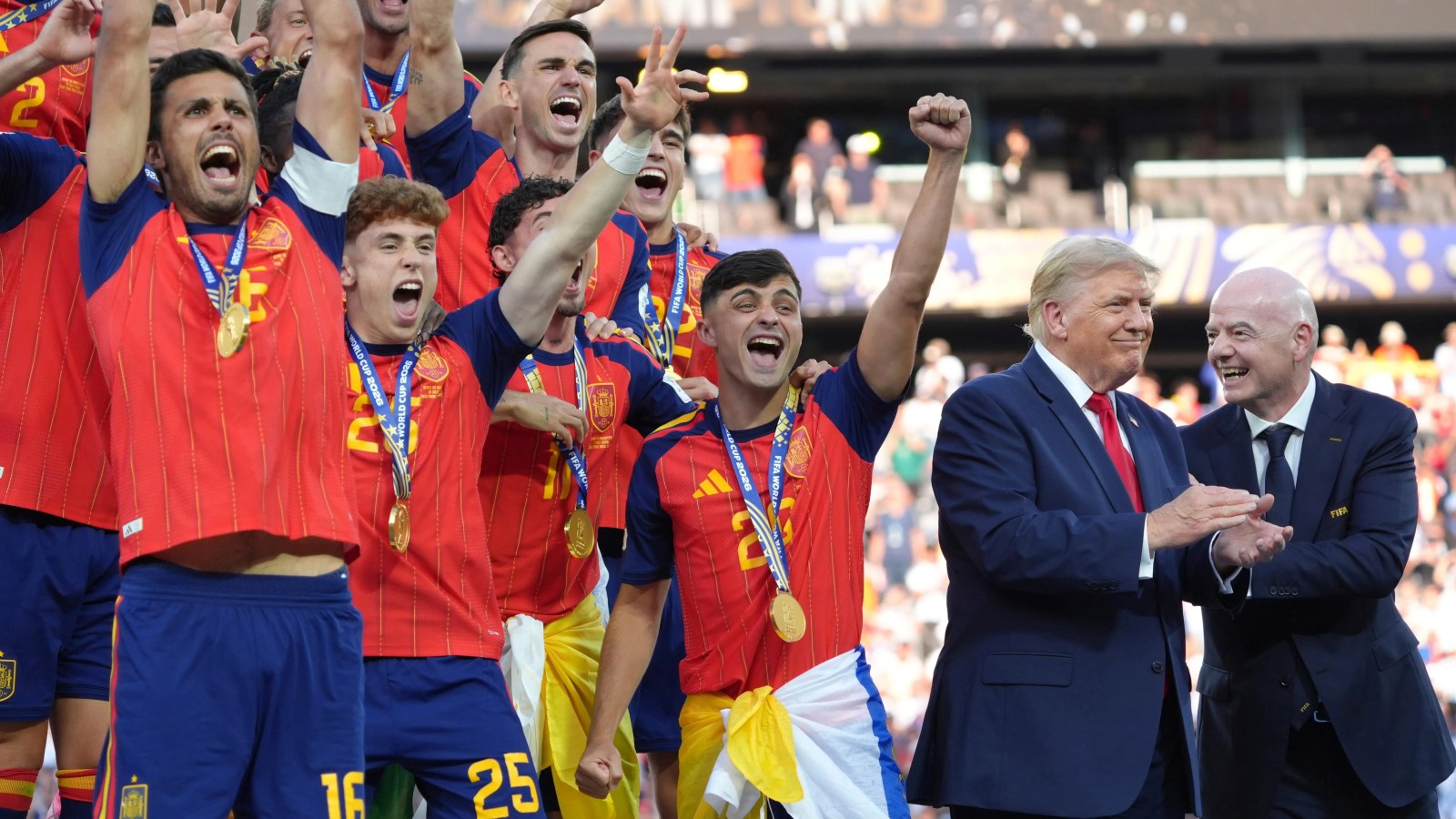
England is set to intensify the growing political pressure on FIFA president Gianni Infantino by formally moving to withdraw its support for his re-election, a significant step that underlines widening concern within European football over his leadership. The move matters because it signals that dissatisfaction is no longer isolated, but is instead developing into a coordinated challenge from major associations ahead of the next phase of FIFA politics. At the centre of the dispute is the failed attempt to sell stakes in the World Cup to private investors, an idea that has triggered a sharp loss of confidence among some of the game’s most influential bodies. With Wales already having withdrawn its backing and UEFA also weighing legal action, Infantino now faces a serious test of authority.
- The English FA is set to write to Gianni Infantino to withdraw its support for his re-election as FIFA president.
- The decision follows a loss of confidence in Infantino’s leadership after a failed attempt to sell stakes in the World Cup to private investors.
- Wales has already withdrawn support for Infantino’s re-election over the same issue.
- UEFA is considering legal action and has put FIFA on notice over the dispute.
- The developments point to a coordinated European push against Infantino as tensions deepen around FIFA governance.
Why the pressure is intensifying
The significance of England’s expected intervention lies in both symbolism and influence. The FA remains one of the most prominent national associations in world football, and a formal withdrawal of support would carry weight far beyond a single vote or statement. It would also indicate that concerns over FIFA’s direction have moved from private frustration into open institutional opposition. In practical terms, that changes the tone of the debate around Infantino’s leadership and raises the prospect of a broader bloc forming against him.
The issue driving this backlash is the failed attempt to sell stakes in the World Cup to private investors, a proposal that appears to have become a breaking point for several European bodies. The World Cup is not only FIFA’s flagship competition but also the central pillar of its sporting and commercial power, so any effort to carve out private investment in that asset was always likely to attract intense scrutiny. What has made this especially damaging is not simply that the plan failed, but that it appears to have undermined trust in the decision-making around the tournament itself. For associations already sensitive to questions of governance, transparency and control, the episode has become a wider judgment on leadership rather than a narrow disagreement over commercial strategy.
That distinction is important. Football associations can often absorb disagreements over revenue models or tournament planning, but confidence is harder to restore once a dispute becomes tied to broader concerns about how power is exercised. In this case, opposition appears to have grown because the World Cup occupies a unique place in the global game. It is not merely FIFA’s biggest commercial property; it is also the competition through which the organisation projects its authority and legitimacy. Any perceived attempt to reshape ownership around that event was therefore likely to provoke a much deeper reaction than a routine policy disagreement.
England’s expected move also matters because it gives the discontent a more formal and visible political expression. Quiet dissatisfaction can be managed, but a written withdrawal of support from one of football’s most influential associations is harder to dismiss. It creates a clearer dividing line between those prepared to continue backing Infantino and those who believe the failed investment plan has exposed a more serious problem at the top of FIFA. That is why this moment looks less like a passing controversy and more like the start of a more organised challenge.
What it means for FIFA and Europe
Wales withdrawing support before England adds another layer to the story because it shows this is not a one-off reaction. Instead, it points to a shared view among parts of European football that the World Cup investment issue crossed an important line. When smaller and larger associations align on a governance question, the political effect can be substantial, particularly when the concern relates to the ownership and future shape of the game’s biggest tournament. England’s expected move therefore looks less like an isolated protest and more like part of a widening campaign to force accountability at the top of FIFA.
UEFA’s position makes the situation even more serious. The fact that legal action is under consideration, and that FIFA has been put on notice, suggests the dispute is no longer confined to political messaging or internal disagreement. It introduces the possibility of a formal confrontation between European football’s governing body and FIFA, something that would raise the stakes considerably. Even without a legal case being launched immediately, the warning itself serves notice that European dissatisfaction has hardened and that the next steps may be pursued through governance mechanisms as well as public pressure.
For Infantino, the challenge is as much about credibility as numbers. Support in any re-election process is about more than securing enough backing; it is also a measure of authority, stability and confidence in leadership. When major associations begin to pull away over a specific strategic failure, the wider perception of control can weaken quickly. That does not automatically determine the outcome of any future election, but it does create a damaging narrative at a time when FIFA would prefer to project unity around the World Cup and its broader global plans.
There is also a broader tension here between commercial ambition and institutional trust. FIFA’s drive to maximise the value of the World Cup is hardly surprising given the tournament’s scale and central importance, but the backlash shows there are limits to how far associations are willing to see that logic applied. The resistance suggests that, for many in Europe, the World Cup is not simply an asset to be leveraged but a competition whose governance structure carries special significance. Once that principle appears threatened, opposition can spread quickly from one association to another, especially when there is a sense that consultation or judgment has fallen short.
The timing matters too because any rift involving the World Cup inevitably resonates across the wider international game. European associations occupy a powerful place in football’s political and commercial landscape, and when they begin to coordinate around a grievance, FIFA cannot easily dismiss it as background noise. England’s expected letter would therefore be important not only for what it says, but for what it may encourage others to do. If more associations decide to follow England and Wales, the pressure on Infantino could shift from a notable controversy into a sustained campaign over the future direction of FIFA leadership.
What happens next will depend on whether this European push gathers further momentum and whether FIFA can contain the fallout from the failed World Cup investment plan. England’s expected withdrawal of support would mark a major escalation, while UEFA’s threat of legal action keeps open the possibility of an even sharper conflict. For now, the immediate picture is clear: confidence in Infantino has been damaged, the World Cup has become the focal point of that discontent, and Europe is moving from frustration to action. The next phase will show whether this remains a forceful protest from a handful of bodies or develops into a defining power struggle over who controls the future of the global game.

Leave a Reply