

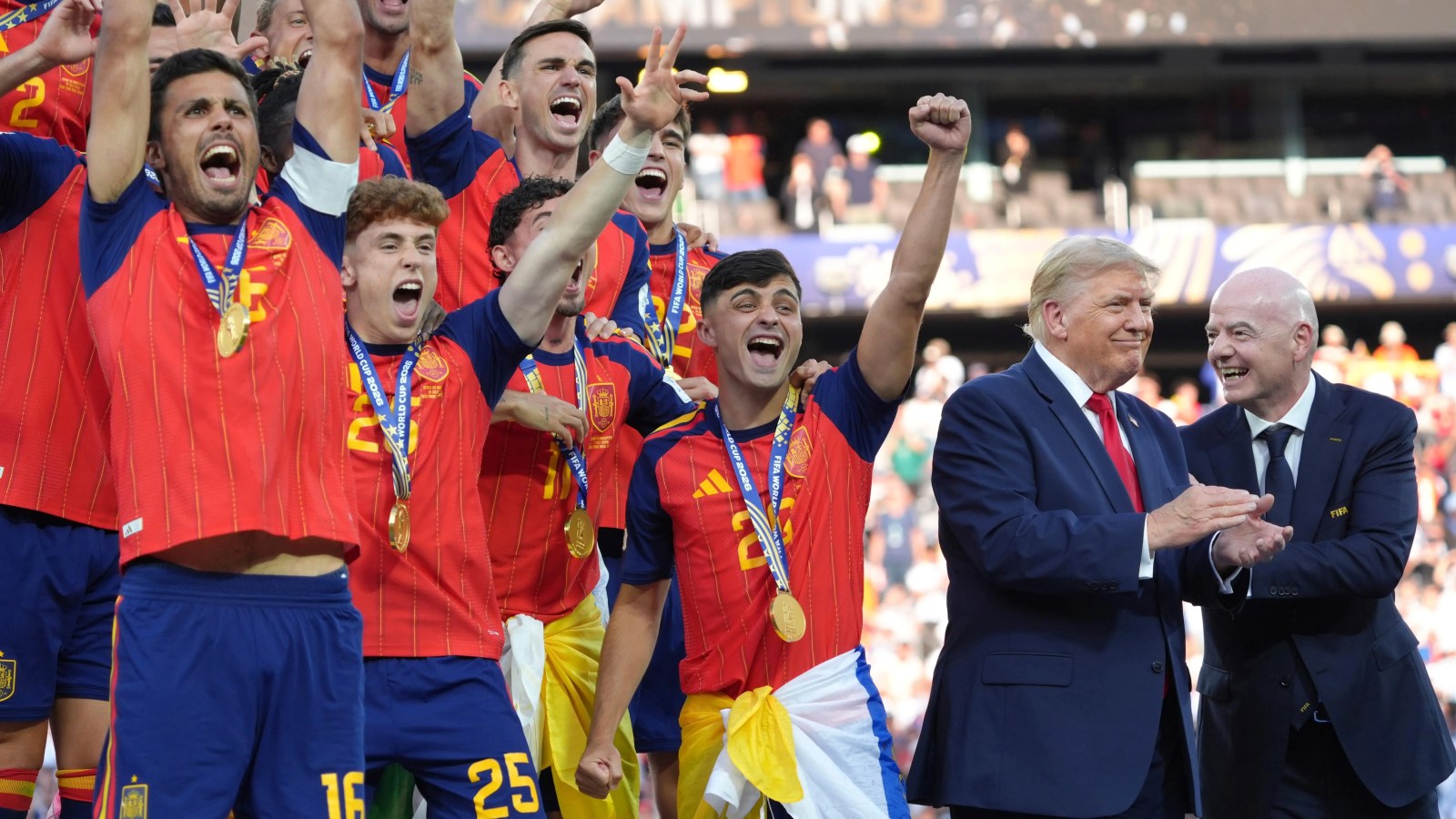
FIFA’s plan to sell a large minority stake in a new company that would run its biggest competitions has opened a major new battle over the future of the World Cup and Club World Cup. The governing body has confirmed that FIFA World Cup Enterprises will seek to raise up to $4.2 billion later this year, based on an initial enterprise value of $10 billion, with investors offered minority, non-controlling interests. The announcement reaches far beyond boardroom finance because it touches the commercial core of the men’s World Cup, the most valuable event in global football. The standout figure is the $4.2 billion fundraising target, a number that underlines the scale of FIFA’s ambition and the intensity of the resistance now building around it.
- FIFA has announced plans to sell a large minority stake in FIFA World Cup Enterprises, a new company that would run its main events including the World Cup and Club World Cup.
- The new entity is set to seek up to $4.2 billion later this year, based on an initial enterprise value of $10 billion.
- Investors would buy minority, non-controlling interests rather than take full command of the business.
- The proposal has triggered strong opposition in Europe, with UEFA criticizing the plan.
- European nations have agreed to boycott the World Cup over the proposal, escalating the dispute around FIFA’s commercial strategy.
Why the proposal has become a flashpoint
At the center of the dispute is a simple but hugely consequential question: how far should FIFA go in monetizing the commercial engine of its flagship tournaments? By placing the World Cup and Club World Cup inside a dedicated corporate vehicle and then inviting outside investors to buy in, FIFA is signaling that it sees long-term value in separating event operations and commercial rights into a more investable structure. Even with investors limited to minority, non-controlling stakes, the move represents a significant shift in how the governing body could manage and finance its most important properties. That is why the plan has drawn such a fierce response, especially in Europe, where concerns about governance, influence and the direction of the game carry enormous political weight.
FIFA’s own framing emphasizes that control would remain in-house, with any stake sale limited to a minority position. On paper, that distinction matters because it suggests the governing body would still retain ultimate authority over the competitions themselves. But the backlash shows that, for critics, the issue is not only about formal control. It is also about whether private capital should gain a foothold in the commercial structures surrounding the World Cup, and what that could mean over time for decision-making, priorities and the balance between sporting stewardship and financial extraction. Once the World Cup is packaged in a way designed to attract billions in investment, every future choice around expansion, scheduling and commercial strategy is likely to be viewed through that same lens.
Pressure grows on Infantino as the stakes rise
The opposition in Europe has turned this into far more than a technical financing discussion. UEFA’s criticism has given institutional shape to the resistance, and the agreement by European nations to boycott the World Cup over the proposal raises the temperature dramatically. A boycott threat, even at the level of political positioning, transforms the issue from a governance dispute into a potential sporting crisis. The World Cup depends on broad participation and legitimacy as much as it depends on revenue, so any serious fracture involving Europe would strike at the credibility of the tournament as well as its business model.
That is why the pressure on Gianni Infantino has intensified so quickly. The investment push is now closely tied to his leadership, and the reaction to it has turned the proposal into a test of authority as much as strategy. If FIFA believed the creation of FIFA World Cup Enterprises would be seen as a modernizing move that unlocks capital while preserving control, the early political cost suggests the calculation has become far more complicated. The current picture shows that FIFA is weighing or advancing a sale of World Cup-related commercial stakes and facing major backlash, but it does not establish that the governing body has already reversed course. For now, the story is less about retreat than about how much resistance FIFA can absorb before it is forced to reconsider the shape, timing or scope of the plan.
There is also a wider football context that makes this proposal especially sensitive. The World Cup is not just another asset on a balance sheet; it is the defining international competition in the sport and one of the few events that still claims truly global ownership in the public imagination. Any change to the way it is commercially organized is bound to provoke scrutiny from confederations, national associations and supporters who fear that financial engineering could outpace sporting accountability. Even if FIFA insists that investors would hold only non-controlling interests, the symbolism of opening the door to outside ownership around the World Cup is powerful. In football politics, symbolism often matters almost as much as legal structure.
For European football, the dispute also reflects a deeper struggle over influence. UEFA has long been one of the strongest power centers in the global game, and any move by FIFA that reshapes the economics of its flagship tournaments inevitably carries political consequences. A sale that raises up to $4.2 billion would not merely provide capital; it would demonstrate FIFA’s ability to leverage the World Cup in new ways without needing consensus from all corners of the sport. That prospect appears to have sharpened the response. The backlash is therefore about principle, but it is also about power: who gets to define the future commercial architecture of football’s biggest competitions, and on what terms.
The structure of the proposed deal adds another layer to the debate. By valuing FIFA World Cup Enterprises at $10 billion and offering minority, non-controlling interests, FIFA is trying to position the company as both attractive to investors and defensible to stakeholders worried about ceding authority. Yet that balancing act may prove difficult to sustain. A valuation of that size invites expectations of growth, returns and long-term commercial optimization, all of which can create pressure on the underlying product. In practical terms, critics are likely to ask whether a tournament wrapped in investor expectations can remain governed solely by sporting logic, even if formal voting control never changes hands.
What happens next will be crucial for the 2026 World Cup landscape because the commercial and political environment around the tournament is now under fresh strain. FIFA has laid out a plan to seek the investment later this year, so the immediate road ahead is likely to be defined by lobbying, negotiation and attempts to contain the fallout. The central question is whether FIFA can persuade opponents that a minority stake sale is a financing tool rather than a surrender of football’s crown jewel to outside interests. Until that answer becomes clearer, the proposed creation and capitalization of FIFA World Cup Enterprises will remain one of the most consequential and contentious stories hanging over the sport.
Leave a Reply