

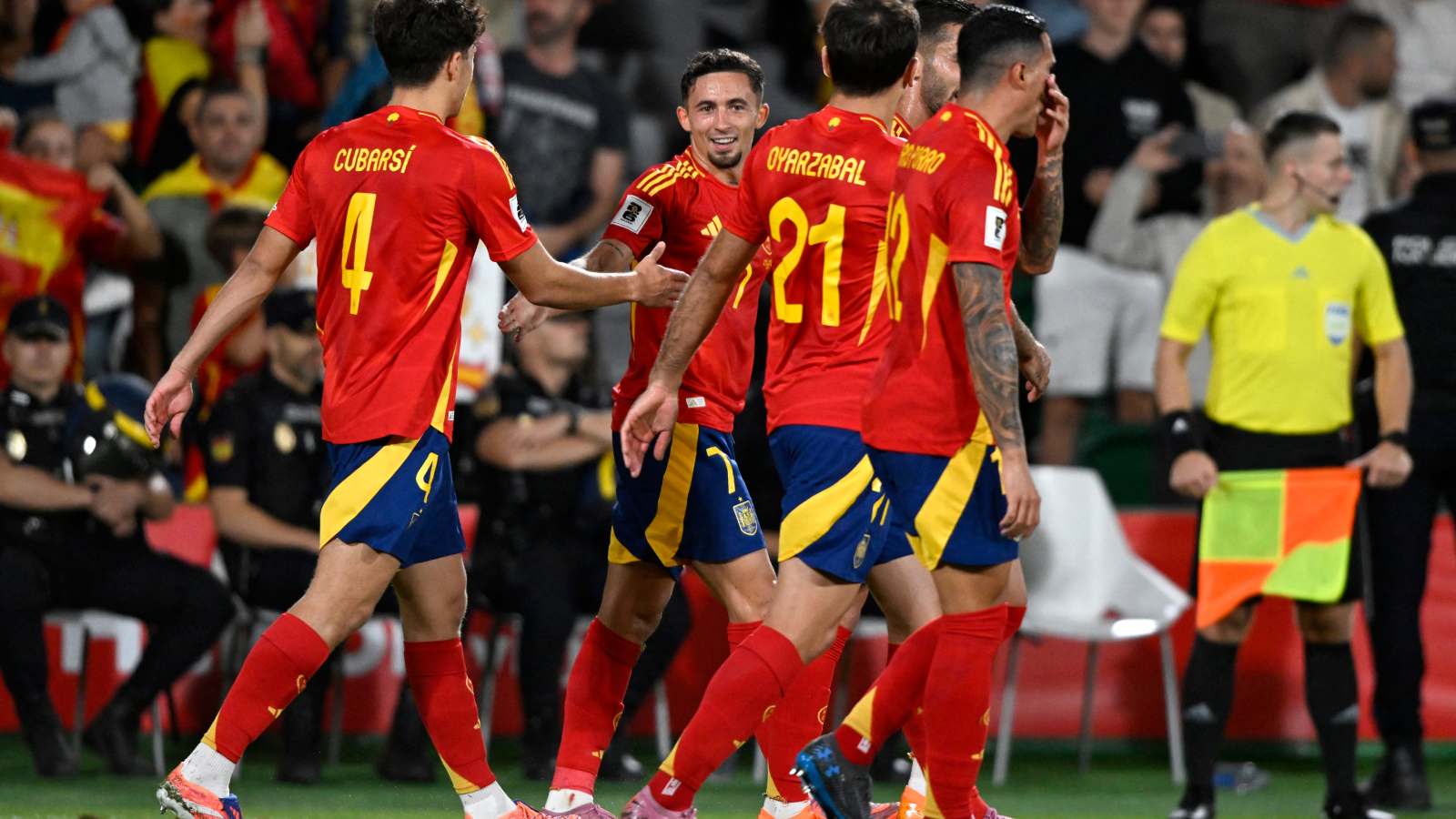
Spain’s 2026 FIFA World Cup campaign ended in the biggest way possible, as a 1-0 victory over Argentina in the final crowned them world champions after a deep and sustained run through the tournament. That result is the defining fact of Spain’s summer, turning an already impressive campaign into a title-winning one on the sport’s grandest stage. It also answers the central question surrounding this team: Spain did not merely contend in 2026, they finished the job. With only the verified details available, the clearest standout is Spain as a collective, a side that navigated the competition all the way to the final and delivered the decisive result when it mattered most.
- Spain won the 2026 FIFA World Cup by beating Argentina 1-0 in the final.
- Spain progressed deep into the tournament and reached the final before lifting the trophy.
- Spain had an official team presence in the 2026 competition, underlining their full participation in the tournament.
- Claims relating to Fermín López missing Spain’s World Cup run because of injury are not verified by the available research.
Spain’s title run reaches its peak
The most important element of this story is straightforward: Spain went all the way and won the World Cup. In tournament football, margins are often narrow and legacies are shaped by single moments, but the broader significance lies in the consistency required to reach a final in the first place. Spain’s path to the last match shows they were able to handle the demands of a long competition, absorb pressure and keep advancing against elite opposition. The final step, a 1-0 win over Argentina, gives the campaign its lasting weight and places this squad at the centre of the 2026 tournament story.
A one-goal victory in a World Cup final typically points to control, discipline and an ability to manage the emotional tension of the occasion. Even without further verified match specifics, the scoreline itself tells an important story about the nature of the contest. Finals are rarely open, carefree spectacles; they are more often shaped by caution, structure and the capacity to protect a lead or find a decisive edge in a tense tactical battle. Spain’s 1-0 success therefore points to a side that executed under maximum pressure, where every mistake can define history and every phase of play carries enormous consequence.
That matters because major tournaments test far more than talent alone. They ask whether a team can adapt from match to match, remain emotionally balanced and sustain its identity over several rounds. Spain’s progression deep into the competition, ending with the trophy, indicates they met those demands. Winning the final against Argentina elevates the campaign beyond a promising run or a near miss; it confirms Spain as the team that turned opportunity into achievement when the stakes were highest.
What the result means for Spain and the wider tournament picture
For Spain, this title is the ultimate validation of their 2026 World Cup. Reaching the final already places a team among the elite of any tournament, but lifting the trophy changes how the entire campaign is remembered. Instead of being judged by isolated performances or individual moments, Spain’s tournament is now framed by its ending: champions, confirmed by a final victory over one of the game’s biggest powers. That is the standard by which World Cups are measured, and Spain met it in full.
The result also matters because it closes the door on any uncertainty about the team’s ceiling. In every World Cup, strong sides can look convincing for long stretches only to fall short in the defining match. Spain avoided that fate. By winning the final, they showed they could carry their form and resilience into the tournament’s most demanding fixture, where composure is often as important as creativity. The 1-0 margin may have been slim, but in a final, narrow wins can be the clearest sign of authority because they show a side can manage the game’s hardest moments without losing control of the outcome.
For Argentina, the defeat inevitably brings the pain of falling one step short, but it also underlines the level of the challenge Spain overcame. Beating Argentina in a World Cup final is not simply another result on the schedule; it is a victory secured against opposition strong enough to reach the same stage. That adds further context to Spain’s accomplishment. The final is where the tournament’s two surviving teams meet after everyone else has been eliminated, so winning there confirms Spain’s ability to outperform a field already narrowed to the very best.
There is also an important reporting point in what cannot be claimed from the verified material. The available research does not confirm that Fermín López missed Spain’s World Cup run because of injury, nor does it verify any emotional reaction, comments or medical details connected to him. In a tournament as closely followed as the World Cup, narratives can quickly form around absences, setbacks and personal stories, but those details require firm confirmation before they can be presented as fact. Here, the verified picture remains focused on Spain’s tournament participation, their deep run and their final victory over Argentina, and that is where the reporting must remain.
That narrower evidence base still leaves a substantial football story. Spain’s official presence in the 2026 competition, their progression to the final and their 1-0 win in the title match provide more than enough to establish the scale of the achievement. It was not a fleeting appearance or a brief surge; it was a complete tournament journey that ended with the sport’s biggest prize. Even without additional verified details on scorers, tactical patterns or individual awards, the outcome alone is powerful enough to define the campaign as one of the landmark stories of the 2026 World Cup.
Looking ahead, Spain’s success in 2026 sets the benchmark for whatever comes next for the national team. World champions are judged differently from that point onward because every future tournament, qualifier and major international window is viewed through the lens of whether they can sustain that level. For now, though, the conclusion is simple and emphatic: Spain reached the final, beat Argentina 1-0 and won the 2026 FIFA World Cup. That is the verified record of their summer, and it is more than enough to secure their place at the summit of the game.




Leave a Reply