

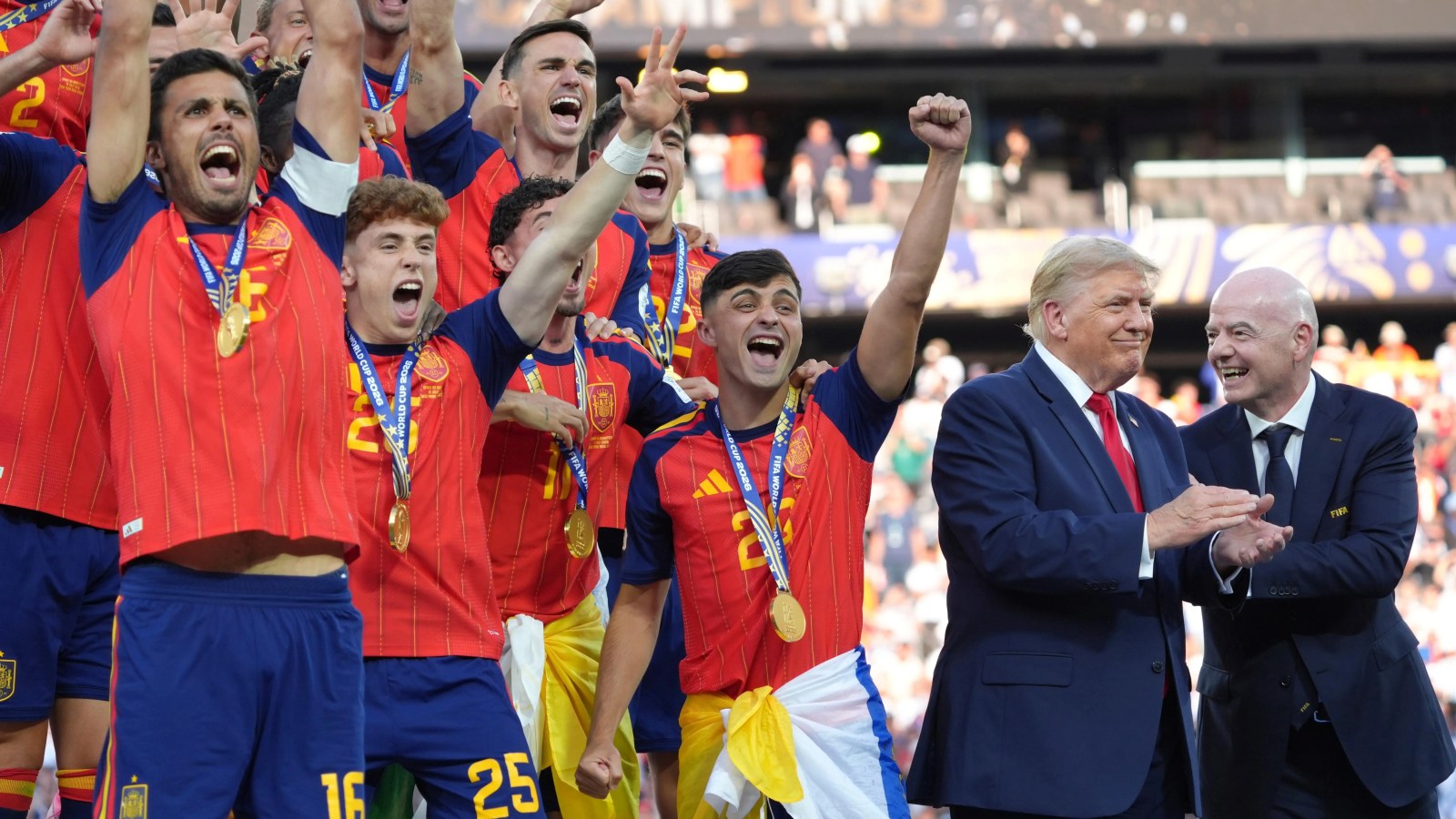
Gianni Infantino struck a combative, dismissive tone on the eve of the 2026 World Cup, telling critics to “take a moment to reflect, meditate or pray” and urging them to “chill, relax” during a news conference at Azteca Stadium. The FIFA president’s remarks came at a sensitive moment, with the tournament facing multiple controversies just before kickoff and global scrutiny intensifying around the event’s leadership and messaging. As his first media appearance of this kind in three years, the session carried added significance, offering a rare direct insight into how FIFA intends to frame the conversation around the competition. Infantino emerged as the central figure not because of any development on the pitch, but because his words helped define the political and public atmosphere surrounding the biggest World Cup ever staged.
- Gianni Infantino told critics on the eve of the 2026 World Cup to “take a moment to reflect, meditate or pray.”
- He also told reporters to “chill, relax” during a pre-World Cup news conference at Azteca Stadium.
- The appearance was described as Infantino’s first media event of this kind in three years.
- His comments came amid multiple controversies surrounding the 2026 tournament.
- Infantino also publicly praised the 2026 World Cup in expansive terms as anticipation builds before the opening of the competition.
Defiant messaging before kickoff
The timing of Infantino’s intervention mattered almost as much as the substance of his remarks. On the eve of a World Cup, governing bodies typically seek to project unity, excitement and operational confidence, and this appearance clearly aimed to reinforce that sense of control. Rather than adopting a conciliatory tone, however, Infantino chose language that confronted the criticism directly, suggesting detractors should step back and reconsider their perspective. By telling critics to reflect, meditate or pray, before adding that they should chill and relax, he signaled that FIFA views at least some of the noise around the tournament as exaggerated rather than as an issue requiring fuller public explanation.
That approach is revealing because it frames the pre-tournament debate as a matter of perception as much as substance. The 2026 World Cup is already immense in scale and expectation, and any controversy surrounding it naturally becomes part of the opening narrative. Infantino’s response, at least in the available remarks, was not to narrow the discussion or offer a technical rebuttal. Instead, he broadened the emotional frame and called for calm. It was a rhetorical move intended to lower the temperature, though for some observers it may have the opposite effect, particularly among those who expected a more measured or detailed response.
The language also underscored FIFA’s confidence in trying to shape the mood before the first ball is kicked. Major sporting organizations understand that the hours before a tournament begins can be as important narratively as the opening matches themselves. In that environment, every phrase from a president or chief executive is weighed for what it reveals about priorities, preparedness and internal confidence. Infantino’s comments did not merely answer criticism; they sought to define the terms on which that criticism should be viewed. By urging calm instead of offering a more expansive defense, he made clear that FIFA wants to move the conversation away from controversy and toward the spectacle of the event itself.
Still, the risk in that strategy is obvious. Calls to relax can sound reassuring to supporters eager for football to begin, but they can also come across as dismissive when concerns remain active in the public sphere. That tension helps explain why the remarks resonated so strongly. On one level, they were an attempt to steady the atmosphere before a major global event. On another, they reinforced the impression of an organization more interested in controlling the tone of the debate than engaging deeply with the criticism surrounding the tournament. That balance between authority and defensiveness now forms part of the World Cup’s immediate backdrop.
A rare appearance and a broader significance
The fact that this was described as Infantino’s first media appearance of this kind in three years added further weight to the occasion. A long gap between open sessions inevitably raises expectations, especially before a World Cup, when every public statement from the top of FIFA is examined for clues about confidence, priorities and strategy. In that context, even brief phrases can become defining headlines, and that is precisely what happened here. Rather than the tournament itself dominating the immediate discussion, the president’s handling of criticism became one of the central talking points from the event at Azteca Stadium.
Azteca was an especially fitting stage for such a moment, given its place among football’s most iconic venues. A pre-World Cup appearance there should have offered an ideal opportunity to keep the spotlight fixed on the competition’s promise, scale and symbolism. Infantino did publicly praise the 2026 event in expansive terms, reinforcing FIFA’s ambition to present the tournament as a landmark edition. Yet the contrast between that celebratory language and his sharper message to critics produced a more complicated public image, blending optimism, defensiveness and institutional confidence in equal measure.
The controversies surrounding the tournament are central to why the remarks carried such force, even if the available verified details do not spell each one out individually. What is clear is that Infantino spoke against a backdrop of sustained scrutiny rather than in a vacuum. That matters because the eve of a World Cup is the point at which attention shifts from planning to delivery. Supporters, teams and organizers all want reassurance that the event is ready to meet its enormous billing. Infantino’s response suggested that FIFA wants to push beyond the criticism and recenter the story on football itself, but the tone he chose ensured the criticism remained part of the conversation.
There was also a strategic dimension to the way the message was delivered. Leaders of major sporting bodies often try to shape the emotional climate before a tournament begins, knowing that first impressions can influence the narrative for days. By praising the 2026 World Cup in sweeping terms while at the same time waving away critics with calls to relax, Infantino attempted to create a contrast between grand anticipation and what he implied was unnecessary negativity. For FIFA, that may be a way of protecting the event’s image at a crucial moment. For critics, it may reinforce concerns that the organization is more comfortable dismissing difficult questions than confronting them directly.
From a broader World Cup perspective, the exchange underlines how modern tournaments are judged on far more than what happens on the field. The football will eventually take center stage, but the political, organizational and reputational environment now forms a major part of a competition’s identity before kickoff. Infantino’s comments therefore matter because they offer a snapshot of FIFA’s current posture: assertive, promotional and unwilling to let criticism dictate the mood of its marquee event. Whether that stance helps steady the atmosphere or deepens the divide between FIFA and its detractors will become clearer as the tournament unfolds and attention gradually shifts toward the matches themselves.
What comes next is straightforward in one sense and uncertain in another. The 2026 World Cup is poised to move from pre-tournament messaging into the reality of competition, where performances, crowds and the daily rhythm of matches can quickly reshape the public mood. Yet Infantino’s remarks ensure the questions surrounding the event will not disappear simply because kickoff has arrived. As the tournament begins, FIFA will hope the football becomes the dominant story, but the president’s words at Azteca Stadium have already ensured that the wider debate will travel alongside it.

Leave a Reply