

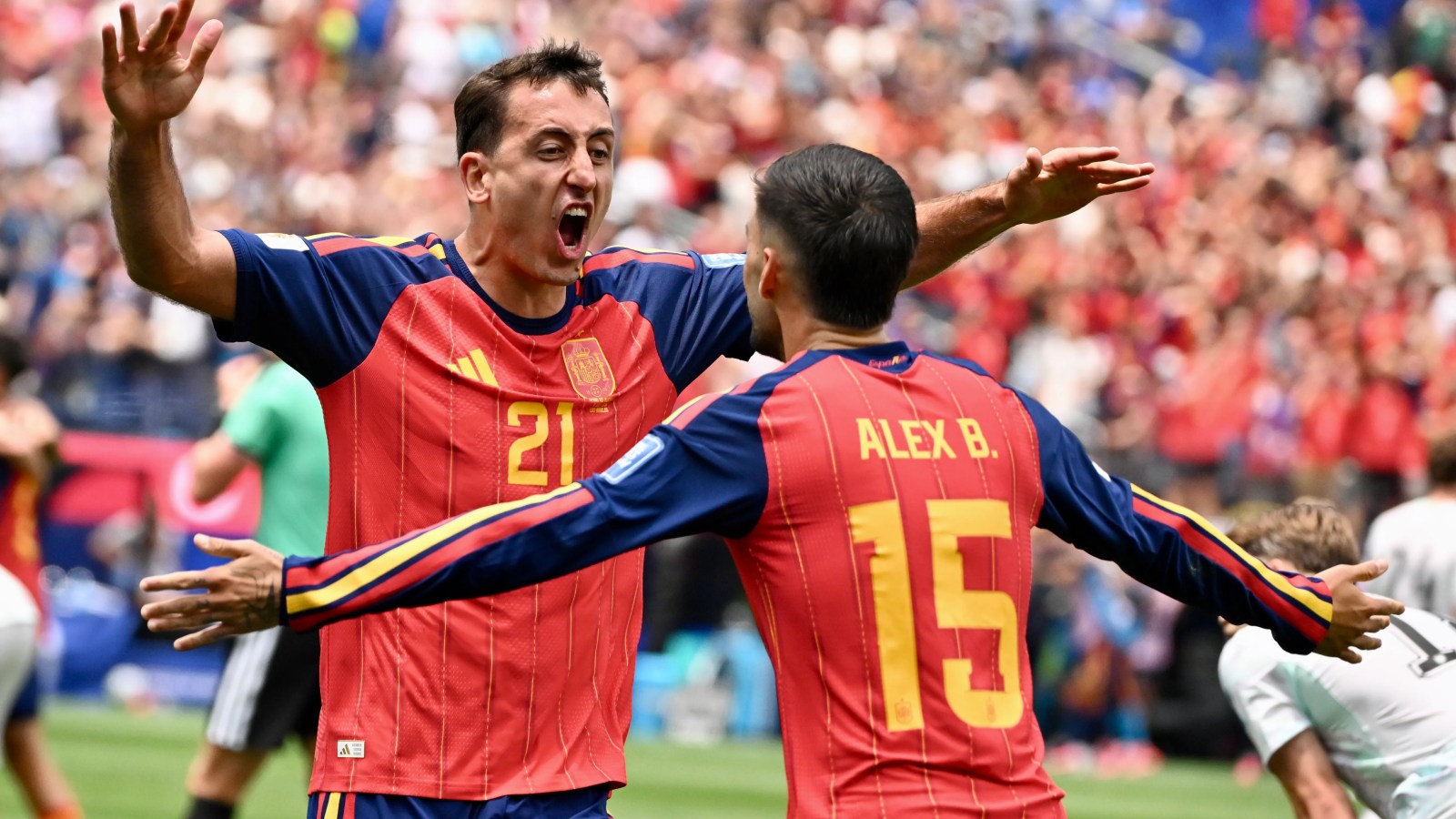
France’s 2026 FIFA World Cup campaign came to an abrupt end on 14 July as Spain secured a 2-0 semi-final victory to book their place in the final, with Mikel Oyarzabal and Pedro Porro scoring the goals that settled the contest. The result matters not only because it removes one of the tournament’s biggest contenders, but because it also highlighted Spain’s ability to control a decisive knockout match against elite opposition. For France, the defeat closes the door on a run that had carried them to the last four and raises immediate questions about how they fell short on the biggest stage before the final. For Spain, the night belonged to the goalscorers and to a collective display that was assured enough to turn a World Cup semi-final into a clear step toward the title.
- Spain defeated France 2-0 in the 2026 FIFA World Cup semi-final on 14 July 2026.
- Mikel Oyarzabal and Pedro Porro scored the goals that sent Spain through to the final.
- The result eliminated France in the last four and ended their hopes of reaching the World Cup final.
- Spain advanced to the World Cup final with a composed and decisive semi-final win.
- Reaction in France followed on Wednesday morning after the defeat, reflecting the scale of the elimination.
Spain seize the moment in the last four
Semi-finals are often decided by a handful of moments, and Spain made theirs count. With Oyarzabal and Porro finding the net, Spain converted pressure into a result France could not reverse. In a match of this magnitude, scoring twice without reply says plenty about the authority of the performance, even without every phase of play available in detail. What is certain is that Spain found the breakthroughs required, while France were unable to produce the response needed to keep their tournament alive.
That inability to recover is what will sting most from the French perspective. Reaching a World Cup semi-final places a team within touching distance of the sport’s biggest occasion, so a 2-0 defeat carries a finality that is difficult to soften. France were not edged out by a single incident or a narrow swing of fortune; they were beaten by a margin that gave Spain clear separation on the scoreboard. At this stage of a tournament, that kind of defeat tends to shape the post-match conversation around missed opportunities, attacking frustration and the challenge of matching an opponent who looked more decisive when it mattered most.
Spain’s edge was not simply in taking chances, but in handling the occasion with greater clarity. Knockout football often turns on composure as much as quality, and Spain showed enough of both to keep control of the semi-final. Once ahead, they did not allow France the kind of momentum that can transform a major match. Instead, the contest increasingly reflected Spain’s ability to manage key moments, while France were left chasing a response that never arrived.
For France, that is the hardest part of the defeat to absorb. Teams can accept a narrow loss shaped by one isolated moment, but this result carried a stronger sense of separation. Spain scored twice, kept a clean sheet and advanced with authority. That combination leaves little room for consolation and ensures the defeat will be judged not only by the outcome, but by the manner in which France were unable to shift the match back in their favour once it began to slip away.
What the result means for both sides
For Spain, the significance is obvious and enormous. A World Cup final place is the reward for navigating the hardest rounds of the competition, and doing so against France adds further weight to the achievement. Oyarzabal and Porro will take the headlines because goals define knockout football, but the wider meaning is that Spain handled one of the tournament’s most demanding assignments. They now move forward with momentum, confidence and the knowledge that they have just defeated a major rival on one of the biggest nights available before the final itself.
For France, the immediate reality is elimination and the abrupt shift from ambition to reflection. A team that had advanced all the way to the semi-finals will now be judged on the final step it could not take, because that is the standard attached to a side with expectations of winning the tournament. The reaction that followed in France on Wednesday morning showed how significant the defeat felt. What can be said with certainty is that losing in the last four to Spain leaves France with a campaign that was strong enough to threaten deep into the tournament, but not strong enough to reach the final.
The scoreline also gives the result a broader competitive meaning. A 2-0 semi-final win is not a chaotic escape or a penalty shootout survival story; it is a result that suggests Spain managed the occasion with clarity and conviction. France, by contrast, leave the tournament knowing they were shut out in a match where one goal might have changed the emotional balance and forced Spain into a different kind of finish. Instead, Spain stayed in front and then moved further clear, which is the clearest possible indication of which side imposed itself on the evening’s decisive moments.
There is also a wider tournament narrative to consider. France entered the last four still carrying the aura that follows any side capable of reaching this stage, and that made them a genuine obstacle on Spain’s path. By removing them with a clean-sheet victory, Spain did more than advance; they sent a message that they can withstand the pressure that defines World Cup knockout football. France’s exit, meanwhile, reinforces how unforgiving this phase is: months or years of preparation and a strong tournament can still end in one difficult night against an opponent who is sharper in front of goal.
From here, the emotional directions of the two camps diverge sharply. Spain can channel this result into belief ahead of the final, with the goals from Oyarzabal and Porro serving as the latest proof that they have players ready to deliver in defining moments. France must process the disappointment of seeing a World Cup challenge halted one match short of the final, a particularly painful point of exit because it offers so little consolation. Their tournament is over, and the lasting image is of Spain celebrating a place in the final while France are left to think about what might have been.
The road ahead is now clear for both nations. Spain move on to the World Cup final with the confidence that comes from a 2-0 semi-final win over France, with Oyarzabal and Porro central to the story of their progress. France exit at the semi-final stage, their campaign ending in defeat against a side that proved more clinical on 14 July. The coming days will be about anticipation for Spain and introspection for France, because one team is now preparing for the biggest match in world football while the other is left to absorb the end of its run.



Leave a Reply