

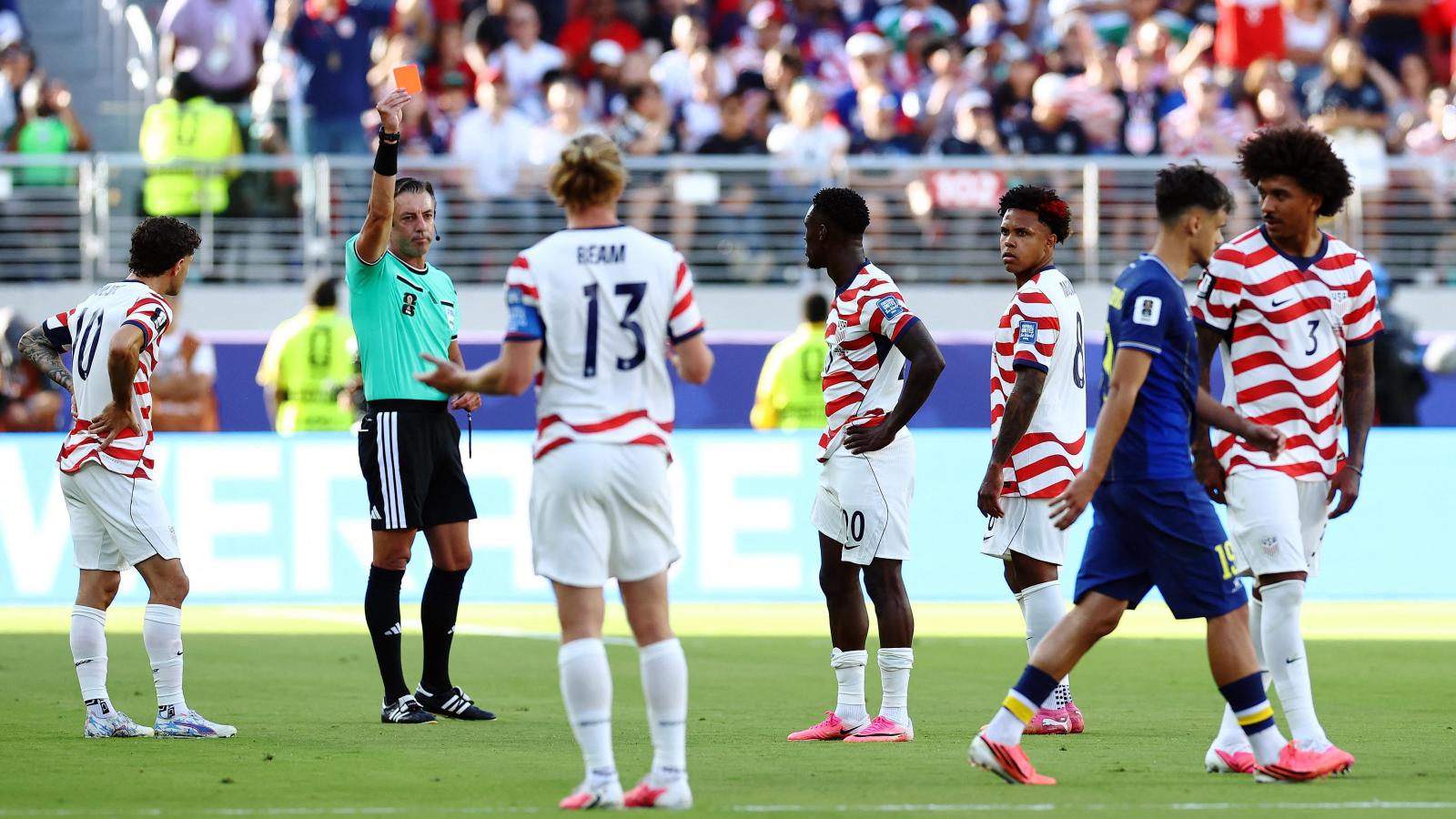
Mohammed Al Kamali has been appointed to oversee disciplinary matters at the 2026 FIFA World Cup, placing an experienced legal figure in a central governance role ahead of the tournament in the United States, Canada and Mexico. Identified as an Emirati legal adviser and chairman of FIFA’s Disciplinary Committee, Al Kamali assumes a position of immediate significance as preparations continue for a competition set to unfold on an unprecedented scale. With the 2026 edition due to become the biggest World Cup in history, the disciplinary framework surrounding the event will carry added importance across a longer schedule and a broader competitive field. That makes Al Kamali the key figure in this development, not because of events on the pitch, but because of the need to maintain order, consistency and procedural clarity throughout the tournament.
- Mohammed Al Kamali has been appointed to oversee disciplinary matters at the 2026 FIFA World Cup.
- He is identified as an Emirati legal adviser and chairman of FIFA’s Disciplinary Committee.
- The 2026 World Cup will be hosted by the United States, Canada and Mexico.
- The tournament is set to be the biggest World Cup in history, featuring 104 matches.
- A specific claim that Al Kamali was “questioned” is not confirmed and cannot be treated as established fact.
Why the appointment matters
Disciplinary oversight is often one of the least visible parts of a World Cup until a flashpoint emerges, but it is fundamental to the smooth running of the competition. Every major international tournament produces moments that require clear interpretation of regulations, whether those issues involve player conduct, team behaviour or broader procedural matters. By appointing Al Kamali to oversee disciplinary matters, FIFA is placing a defined legal authority at the centre of that process well before the opening match. In a tournament that will stretch across three host nations, that clarity matters, because consistency in application can be just as important as the rules themselves.
The scale of the 2026 competition gives the role even greater significance. A World Cup featuring 104 matches will inevitably generate more incidents, more decisions and more pressure on the structures that govern the event away from the field of play. More matches mean more teams, more players, more staff and more opportunities for disciplinary questions to arise at critical stages of the tournament. In that context, oversight is not merely an administrative detail; it becomes part of the competition’s integrity. The official responsible for guiding that area will help shape how quickly and confidently the tournament can respond when difficult situations arise.
The context of a three-country World Cup
Hosting the World Cup across the United States, Canada and Mexico already guarantees a level of logistical complexity unlike that of a single-nation tournament. The spread of venues, travel demands and operational coordination required for a three-country event mean every part of tournament governance must be robust. Disciplinary administration sits within that wider structure, because decisions may need to be processed and communicated efficiently across a vast footprint. Al Kamali’s appointment therefore fits into a broader need for certainty and organisation as football prepares for one of the most ambitious World Cups ever staged.
There is also symbolic importance in confirming who will oversee such a sensitive area before the event begins to dominate the sporting calendar. The World Cup is defined by elite performances and global attention, but it is also shaped by how well the competition handles tension, controversy and high-stakes moments. A disciplinary process that is seen as stable and clearly led can reduce ambiguity when pressure rises in the knockout rounds or when incidents threaten to overshadow the football. That does not eliminate debate, because major tournaments always attract scrutiny, but it does establish accountability within the competition’s legal and regulatory framework. For a World Cup of this size, that foundation is essential.
Al Kamali’s existing identification as chairman of FIFA’s Disciplinary Committee is especially relevant because it links tournament oversight to an established institutional role rather than an improvised appointment. Continuity can be valuable at events of this magnitude, where the credibility of decisions often depends on whether the decision-makers are already embedded in the governing structure. His background as an Emirati legal adviser also underlines that the role is grounded in legal and procedural expertise. That combination suggests a focus on process, interpretation and consistency, all of which become more important as the tournament grows. In practical terms, the 2026 World Cup will require exactly that kind of steady framework to manage the demands created by its expanded format.
One point does require careful treatment: a specific claim that Al Kamali was “questioned” is not confirmed by the verified information available here. That means it cannot be presented as part of the established story surrounding his appointment. In a tournament environment where governance issues can quickly be magnified, the distinction between confirmed and unconfirmed details matters. The confirmed position is that he has been appointed to oversee disciplinary matters and that he already holds a senior disciplinary role within FIFA. Anything beyond those verified facts must remain outside the scope of responsible reporting.
Viewed more broadly, this development is another reminder that the 2026 World Cup will be defined not only by its football but also by the systems required to support an expanded global event. The promise of 104 matches points to a tournament of remarkable scale, but scale also increases the need for structure. Every additional fixture adds another layer of operational and regulatory responsibility, and disciplinary oversight is one of the areas where that pressure can become most acute. By confirming Al Kamali in this role, FIFA is addressing a key part of the tournament architecture before the competition enters its final buildup.
The next phase is likely to bring greater focus on how all tournament systems are being prepared for a World Cup spread across the United States, Canada and Mexico. For now, the appointment of Mohammed Al Kamali establishes who will be responsible for one of the event’s most important off-field functions. As the biggest World Cup in history moves closer, featuring 104 matches, attention will continue to build around the people and processes tasked with protecting the competition’s order and integrity. Al Kamali’s role may sit away from the spotlight of the pitch, but it is set to be a significant part of how the 2026 tournament is managed from start to finish.


Leave a Reply