

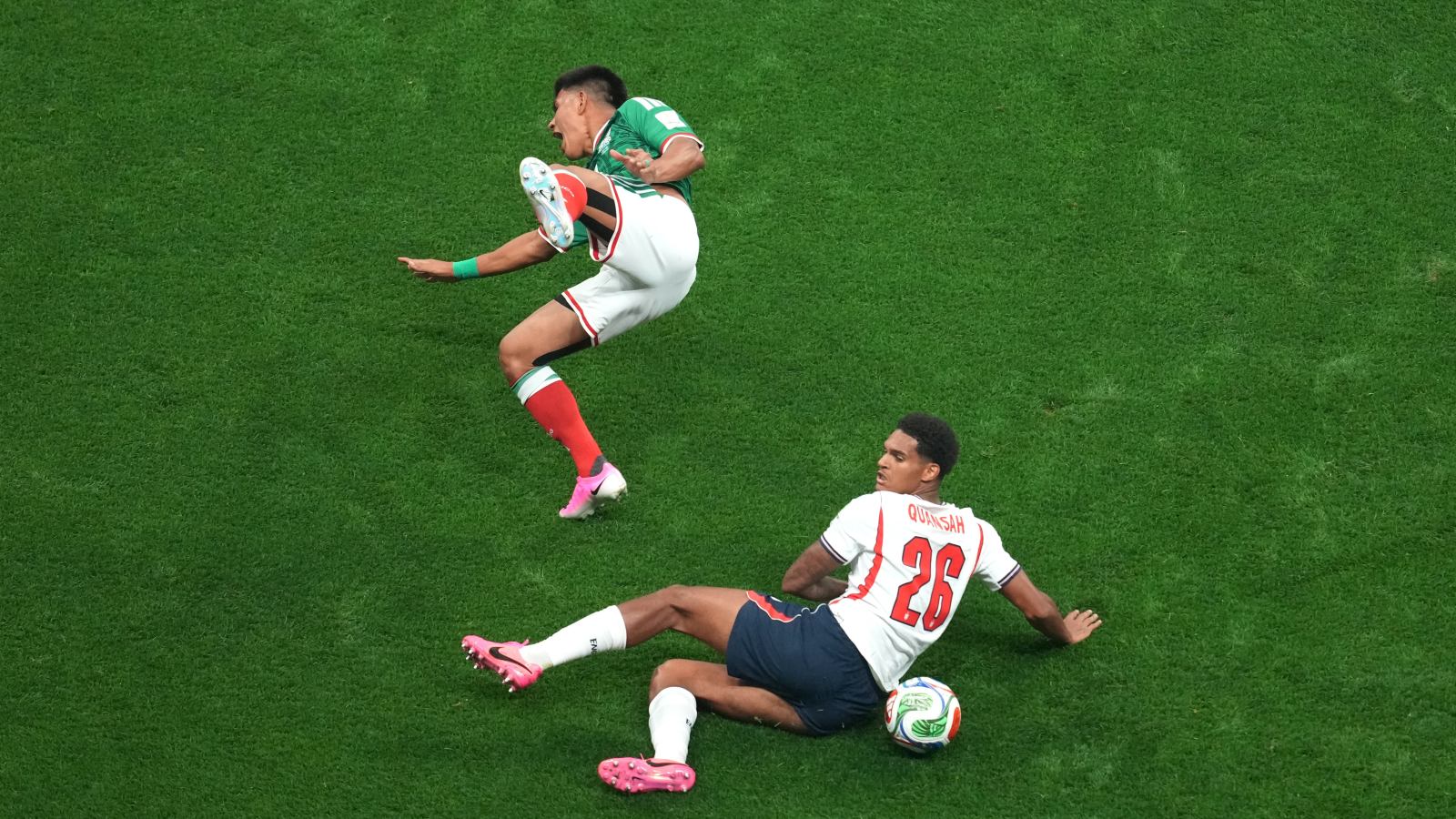
England’s meeting with Mexico at the 2026 FIFA World Cup is part of the confirmed tournament record, and the fixture carries broader significance because Mexico is verified to have reached the knockout stage of the expanded competition. What remains unclear from the available evidence is the central claim that has circulated around the game. There is no confirmation here that England beat Mexico in the last 16, and there is no verified support for any sending-off involving Jarell Quansah or a subsequent two-game ban. That makes the match notable less for a settled narrative than for the distinction between what is established and what remains unverified. In a tournament as large and fast-moving as the 2026 World Cup, that distinction matters, particularly when knockout implications and disciplinary consequences are attached to a single fixture.
- England played Mexico in the 2026 FIFA World Cup, and highlights are available for that match.
- Mexico is confirmed to have reached the knockout stage of the 2026 tournament.
- The expanded 2026 World Cup format includes both a round of 32 and a round of 16.
- There is no verified confirmation here that England beat Mexico in the last 16.
- There is no verified evidence in the available results of Jarell Quansah being sent off or receiving a two-game ban.
What the verified record establishes
The clearest starting point is the fixture itself. England and Mexico did meet at the 2026 FIFA World Cup, and the existence of highlights confirms that the game forms part of the documented tournament schedule. That matters because it anchors the discussion in an actual World Cup match rather than rumor, confusion or a misidentified contest. From there, the verified tournament record also confirms that Mexico progressed into the knockout phase, immediately giving the game greater weight within the wider structure of the competition.
The tournament format is another essential part of the picture. The 2026 World Cup has been expanded, and the confirmed structure includes both a round of 32 and a round of 16. That context is critical because any claim about England facing Mexico in a specific knockout round has to align with that format. Precision over the stage is vital when assessing what happened and what it meant. In practical terms, the expanded bracket creates more possible routes through the competition, but it also creates more room for confusion when individual results are discussed without complete supporting detail.
That is exactly where the uncertainty begins in this case. The available evidence does not confirm that England beat Mexico in the last 16, even though the teams’ meeting is established and Mexico’s knockout qualification is established. Without a verified scoreline, goalscorers or official match detail in the material provided, it would be wrong to go further than the record allows. In knockout football, the distinction between a round of 32 tie and a round of 16 tie is substantial, shaping not only how a result is remembered but also how each team’s tournament path is understood.
That lack of confirmation is not a minor gap. It affects the entire framing of the fixture. A verified win for England in the last 16 would carry a very different meaning from a meeting in another round or a match whose outcome cannot yet be pinned down from the evidence available here. In a World Cup setting, where every knockout result can redefine expectations, accuracy over the basic facts is essential before any broader conclusions are drawn.
Why the unverified details matter
The unconfirmed disciplinary element is just as important. There is nothing in the material provided that verifies Jarell Quansah being sent off, nor is there verified evidence of any disciplinary ruling linked to this match. That means there is no sound basis here to state that he received a red card, and no sound basis to state that he was handed a two-game ban. In World Cup knockout football, those details can alter the entire reading of a game, affecting tactical interpretation, selection planning and the outlook for the next round. That is precisely why they cannot be treated casually.
If a player had been dismissed in a knockout tie, it would naturally become one of the defining features of the contest. A red card can change possession patterns, reshape defensive structure and swing the emotional momentum of a match. Likewise, a two-match suspension in a major tournament would carry serious consequences, potentially affecting not just one fixture but a team’s route through the bracket. Yet none of that can be responsibly applied here because the verified record does not support it. The absence of confirmation is not a technical footnote; it changes the piece from a conventional match narrative into a careful assessment of what the tournament evidence actually shows.
For Mexico, the confirmed fact of reaching the knockout stage remains the clearest competitive takeaway available. In an expanded World Cup, advancing beyond the group phase is still a meaningful achievement because it places a team into the elimination rounds, where margins become tighter and pressure intensifies. Even without a verified score or confirmed round designation for the England game, Mexico’s place in the knockout bracket points to a campaign strong enough to survive the opening phase. That alone keeps the team central to the tournament story and explains why any fixture involving them at that stage commands attention.
For England, the confirmed meeting with Mexico still carries obvious significance because opposition of that level offers one of the clearest tests of a side’s standing at a World Cup. But without verified confirmation of the result or the exact round, the match cannot be used as definitive evidence of progression, elimination or a disciplinary setback affecting the squad. That restraint is especially important in a tournament where every knockout result can reshape perceptions of title chances, squad depth and tactical flexibility. On the evidence available here, the verified record simply does not go far enough to support those wider conclusions.
What can be said with confidence is that the expanded 2026 structure has increased the number of consequential fixtures and added complexity to the way tournament paths are tracked. A meeting between England and Mexico fits naturally into that bigger picture because both nations attract attention and because knockout-stage football magnifies every incident. But the responsible reading of this specific case is straightforward: the match happened, Mexico reached the knockout stage, and the competition includes both a round of 32 and a round of 16. Beyond that, the headline claims about an England last-16 win, a Quansah red card and a two-game ban remain unverified on the evidence available here.
Looking ahead, the key for both teams is how their confirmed tournament status fits into the next phase of the World Cup story. Mexico’s knockout presence is established, and England’s involvement in a high-profile meeting with Mexico is established, but any further judgment on the result or disciplinary fallout requires firmer match documentation than the material currently provides. Until then, the clearest conclusion is that the tournament framework is solid, while the most dramatic claims attached to this fixture are not. In a World Cup setting, preserving that distinction is essential to maintaining an accurate account of what actually happened.


Leave a Reply