

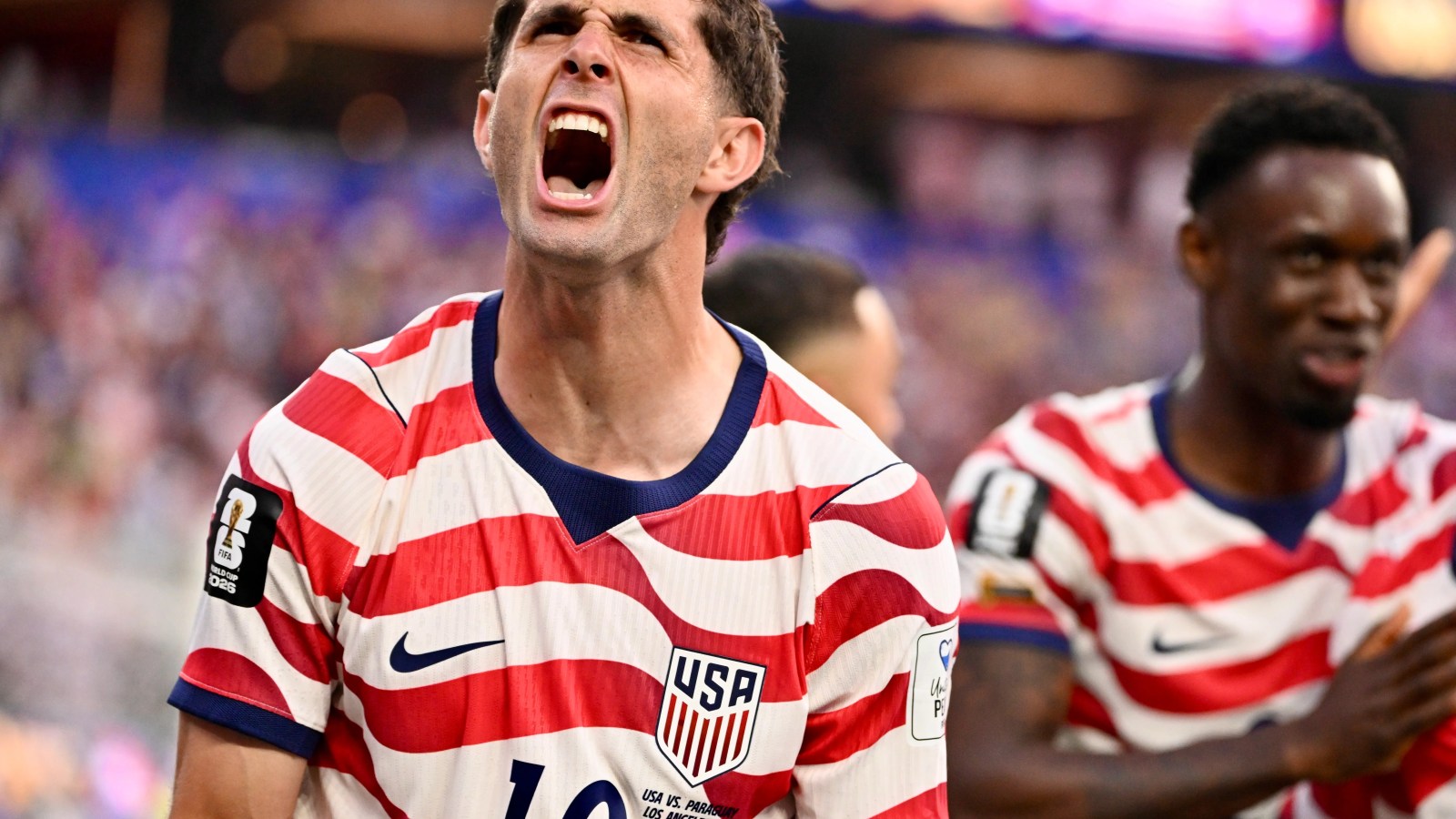
The United States’ FIFA World Cup 2026 campaign reached the knockout stage with a Round of 16 meeting against Belgium on 7 July 2026, a fixture that immediately carried major significance because of Belgium’s experience and star power. Belgium arrived under coach Rudi Garcia with a squad featuring Romelu Lukaku, Kevin De Bruyne and Thibaut Courtois, giving the tie a clear sense of occasion and presenting a formidable challenge for the Americans. At the same time, one of the biggest talking points around the match has centered on Christian Pulisic, but the claim that he fractured his right leg during the game is not verified by the available record. With no confirmed result and no confirmed injury detail in the verified information, the central fact remains the importance of the fixture itself and the uncertainty surrounding one of the United States’ most important players.
- The United States faced Belgium in the FIFA World Cup 2026 Round of 16 on 7 July 2026.
- Belgium were at the tournament under coach Rudi Garcia.
- Belgium’s squad featured Romelu Lukaku, Kevin De Bruyne and Thibaut Courtois.
- The available verified results do not confirm the match result.
- The claim that Christian Pulisic fractured his right leg in the match is unverified on the current record.
A knockout tie with heavyweight implications
A Round of 16 match sharpens every detail, and this one stood out because it paired the United States with a Belgium side carrying proven pedigree and elite talent. Even without a verified final score in the available material, the fixture marks a major moment in the tournament narrative, because knockout football turns every matchup into a test of composure, execution and depth. Belgium’s profile under Garcia suggested a team built around experience in decisive matches, particularly with Courtois’ presence in goal, De Bruyne’s authority in possession and Lukaku’s physical threat in attack. For the United States, simply reaching this stage and drawing an opponent of this caliber framed the contest as a stern measure of how far the team could go against one of Europe’s most recognizable sides.
The significance of Belgium’s personnel is clear even without unsupported tactical detail. Courtois gives any team a base of calm and elite shot-stopping, while De Bruyne’s reputation as a creator means opponents must remain alert to space between midfield and defense. Lukaku presents a different problem, rooted in strength, penalty-area presence and the ability to turn direct service into immediate danger. Those three names alone explain why Belgium represented such a demanding knockout opponent and why the match carried weight beyond a single result. This was the kind of tie that tests defensive discipline, transition management and the nerve required to survive tournament football.
That broader context is what made the matchup so compelling. Belgium entered as a side with established tournament credibility and players accustomed to the pressure that comes with high-stakes elimination games. The United States, by contrast, were trying to navigate one of the competition’s most unforgiving stages against a team with proven match-winners across the spine of the lineup. Even in the absence of a confirmed scoreline, the significance of the occasion is unchanged: this was a serious examination of the Americans’ resilience, concentration and ability to handle a heavyweight opponent on the World Cup stage.
Pulisic uncertainty shapes the wider conversation
The uncertainty around Pulisic has become a major part of the discussion, but the verified record is clear on one point: the claim that he fractured his right leg in this match is not confirmed. That distinction matters because knockout-stage narratives can quickly become distorted when a high-profile player is involved, especially one so closely tied to the United States’ attacking identity. Pulisic’s influence on the American side makes any injury rumor instantly significant, yet responsible reporting requires a strict line between what is known and what is not. In this case, what is known is limited to the existence of the match and Belgium’s tournament context, while the injury claim remains unverified and therefore cannot be treated as established fact.
That lack of confirmation also shapes how the match should be interpreted more broadly. Without a verified result, it is not possible to draw conclusions about whether the United States advanced, exited or how the contest unfolded from moment to moment. Without verified injury details, it is equally impossible to assess whether Pulisic’s condition altered the game or the team’s immediate outlook. What can be said is that the very presence of such uncertainty underscores how tightly contested and emotionally charged knockout matches can become, with attention often shifting from the field to the status of a single star player. For the United States, that spotlight reflects Pulisic’s standing within the team, but it does not change the need for factual restraint.
Belgium’s side of the story is more clearly defined by the available information, which confirms both the coaching setup and the headline names in the squad. Garcia’s leadership provided the framework for a team expected to balance control and threat, with De Bruyne and Lukaku offering obvious focal points and Courtois supplying security behind them. In knockout football, that combination of structure and individual quality often separates contenders from teams that merely reach the last 16. The United States, therefore, were confronting not just a famous opponent but one equipped with players capable of deciding a match in different ways, whether through possession, direct attacking pressure or crucial saves in decisive moments.
From the American perspective, the significance of the occasion remains intact even without a confirmed scoreline. A Round of 16 appearance against Belgium places the team at one of the tournament’s defining pressure points, where margins are thin and every decision carries extra weight. Matches at this stage are often remembered less for volume than for key moments, defensive concentration and the ability to handle swings in momentum. Because the available record does not verify those moments here, the safest and most accurate reading is that the fixture represented a major benchmark for the United States and a serious challenge against one of the tournament’s most credentialed squads. That alone makes it a notable chapter of the World Cup, even while some of the surrounding claims remain unresolved.
What comes next depends on information beyond the current verified record, but the immediate takeaway is straightforward: the United States met Belgium in the World Cup Round of 16 on 7 July 2026, and Belgium entered that contest under Rudi Garcia with Courtois, De Bruyne and Lukaku in the squad. Any claim about the final result, and any assertion that Pulisic suffered a fractured right leg in the match, remains unconfirmed here and should be treated with caution. Until firmer details are established, the story is best understood as a high-stakes knockout meeting defined by Belgium’s star quality and by unanswered questions surrounding the United States’ standout attacker.

Leave a Reply