

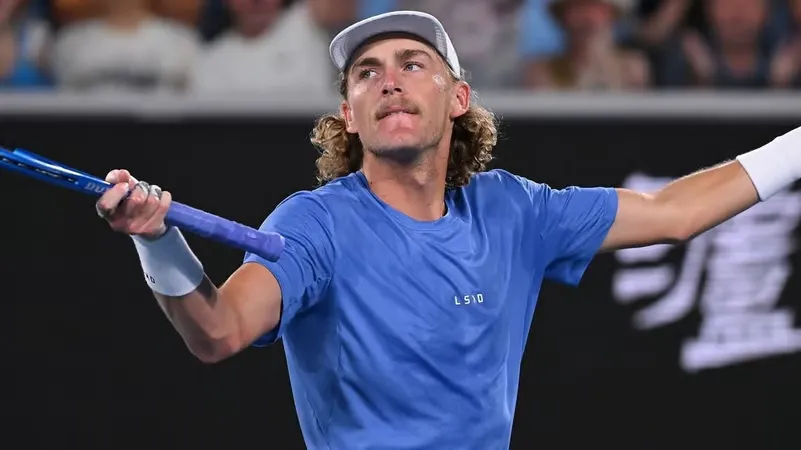
Australian tennis star Max Purcell has admitted to breaching World Anti-Doping Agency (WADA) rules and has voluntarily accepted a suspension. The 26-year-old, who secured major titles at Wimbledon in 2022 and the US Open in 2023, acknowledged his involvement in an anti-doping violation concerning the “use of a prohibited method.”
Purcell revealed that he had “unknowingly received” an intravenous infusion of vitamins that exceeded the 100ml limit set by WADA. The issue came to light when Purcell received his medical records last week, prompting him to alert the International Tennis Integrity Agency (ITIA), the body responsible for enforcing WADA regulations.
“This news was devastating to me because I pride myself on being an athlete who always ensures that everything I do is WADA compliant,” Purcell said. “I immediately volunteered the information to the ITIA and have been fully transparent in order to put this matter behind me.”
As a result of the breach, officials have provisionally banned Purcell from playing in, coaching at, or attending any tennis events. The ITIA did not specify the exact length of the suspension, but it has been in effect since December 12. The time served under provisional suspension will count towards any future sanction, according to the ITIA’s statement.
The ban could potentially affect Purcell’s participation in the Australian Open, which begins on January 12, 2024. Purcell’s case follows a series of high-profile anti-doping incidents in tennis, including those involving world number one Jannik Sinner and world number two Iga Swiatek.
Sinner, 23, was charged after twice testing positive for traces of the steroid clostebol in March, although he denied knowingly using the substance. An independent panel later ruled there was “no fault or negligence” on Sinner’s part, and he is currently awaiting the outcome of an appeal to the Court of Arbitration for Sport (CAS).
Swiatek, the 23-year-old Polish tennis star, accepted a one month suspension in August after testing positive for a banned heart medication. Swiatek maintained that the violation was unintentional.
Purcell’s case highlights the ongoing scrutiny of anti-doping regulations in professional tennis, with athletes across the sport facing increasing pressure to ensure compliance with WADA standards.


Leave a Reply