


As the Paris Summer Olympics approaches, Indian athletes are preparing to showcase their talents and pride on the global stage. While we celebrate today’s champions, it’s important to remember the trailblazers who paved the way for Indians in international sports. One such pioneer is Lady Meherbai Tata, who made history nearly a century ago as the first Indian woman to compete in the Olympics, playing mixed doubles tennis at the 1924 Paris Games.
What made her achievement even more remarkable was that she competed in a traditional Parsi saree, setting herself apart from the other players in their skirts and tees. Lady Meherbai not only broke gender barriers but also defied cultural norms, becoming a symbol of empowerment and strength.
Who Was Lady Meherbai Tata?
Born on October 10, 1879, to Jerbai Bhabha and H.J. Bhabha, the Inspector-General of Education for the State of Mysore, Meherbai grew up in a progressive Parsi household. Her upbringing was steeped in both Indian tradition and Western liberal ideas. After her matriculation, she studied English, Latin, and science, building foundation for a life of intellectual pursuit and social activism.
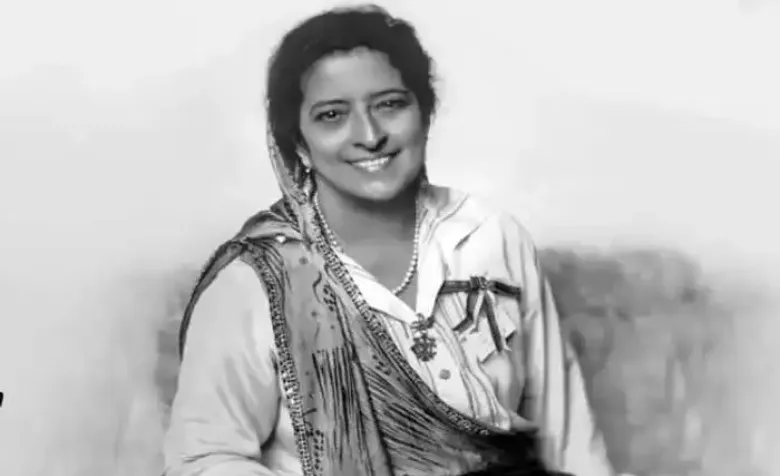
Her path intersected with the Tata legacy when Jamsetji Tata introduced her to his son, Dorabji Tata. Sharing common interests in sports and travel, Meherbai and Dorabji married on February 14, 1898. In 1910, after Dorabji was knighted for his contributions to industry, Meherbai became Lady Tata.
As a passionate tennis player, Meherbai won the prestigious Triple Crown at the Western India Tennis Tournament, one of several accolades in her sporting career. But her influence extended far beyond the tennis court.
Guardian of the Tata Legacy
While today’s India cannot be imagined without the Tata Group, few know about Lady Meherbai Tata’s critical role in safeguarding the legacy during a time of crisis. When the Tata Group faced severe financial challenges following World War I, Meherbai made a selfless decision: she mortgaged her 245.35-carat Jubilee Diamond, a prized gift from her husband, to save the company. Her sacrifice ensured the survival of the Tata empire and protected the livelihoods of thousands of employees.
Beyond her financial contributions, Meherbai shaped the future of the Tata Group through her philanthropic efforts. Supporting initiatives that strengthened the company’s long-term vision.
Champion for Women’s Rights
Meherbai Tata’s legacy is not just tied to Tata name; she was a tireless advocate for women’s empowerment and social-reform. She believed that India’s progress depended on elevating women to the same status as upper-class men. Meherbai championed women’s education and equal rights, using her influence to push for significant legal reforms.
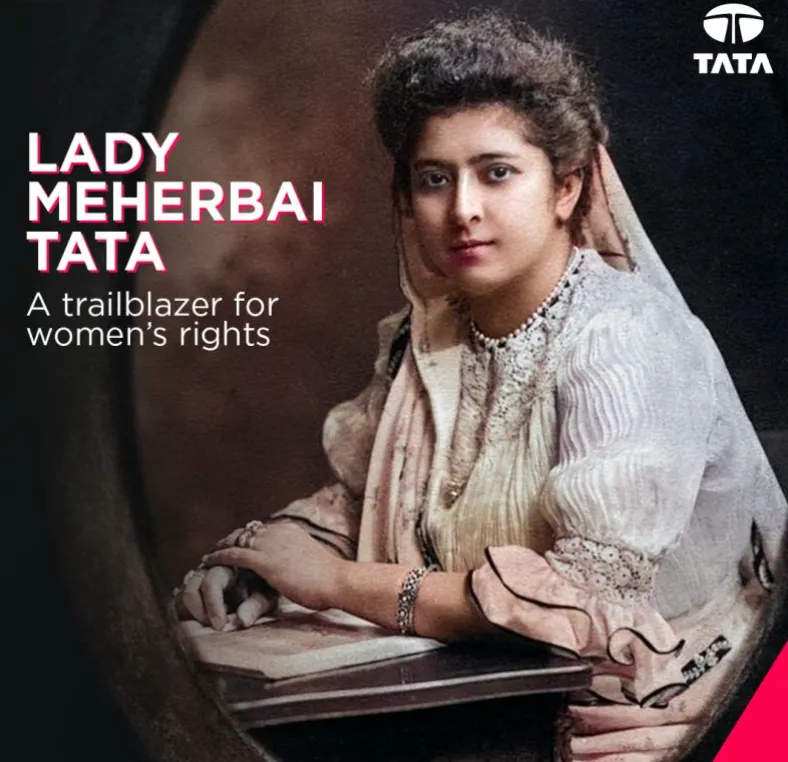
As a member of the National Women’s Council and the All India Women’s Conference, she campaigned for the Hindu Marriage Bill in 1927 and played a key role in the passing of the Child Marriage Restraint Act (Sarada Act) in 1929. She also fought for women’s political rights in the new Indian Constitution, demanding equality for all women.
Meherbai founded the Bombay Presidency Women’s Council and introduced India to the International Council of Women. Through the Red Cross Society, she raised her voice for the rights of women, laborers, migrants, and marginalized communities, becoming a leading advocate for social justice.
A Lasting Legacy
Meherbai Tata passed away on June 18, 1931, in North Wales, after a battle with leukemia. Following her death, Dorabji Tata bequeathed most of his personal wealth—including substantial shares in Tata enterprises and his late wife’s jewelry—to philanthropy, furthering the couple’s commitment to social progress.
Today, Lady Meherbai Tata is remembered as a symbol of courage, resilience, and advocacy for women’s rights. Her legacy continues to inspire generations to challenge societal norms and fight for equality.



Leave a Reply