

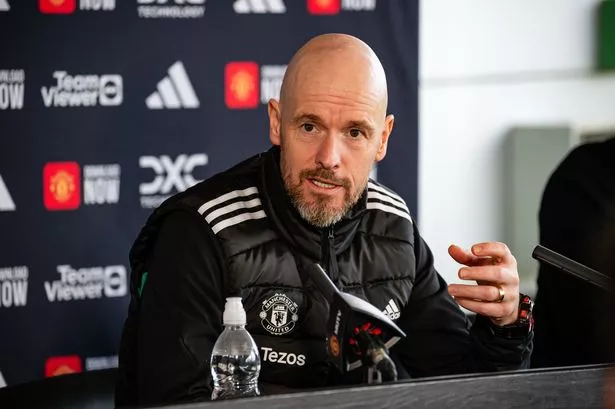
When is it appropriate to ask a manager about their job security? Is there ever a suitable moment? Should a manager be allowed to savor their FA Cup victory over one of the best teams in the world without facing questions about their future?
The recent exchange between Gary Lineker, Alan Shearer, and Erik ten Hag has sparked significant debate. Following Manchester United’s FA Cup triumph, Lineker began the interview with the usual congratulatory remarks, acknowledging the Dutchman’s success and the joy of defeating a rival.
The conversation took a turn when Lineker inquired if Ten Hag felt unfairly treated by the media, to which Ten Hag agreed. Shearer then pointedly addressed the inconsistency in the team’s performance. Attributing their eighth place finish to a lack of the determination shown in the FA Cup final.
Lineker, diplomatically, asked Ten Hag if he knew he still had his job, a question that seemed to annoy the manager. The reaction was swift. Headlines like “Alan Shearer and Gary Lineker slammed for ‘pathetic’ Erik ten Hag interview” and “Gary Lineker leaves Erik ten Hag looking FURIOUS” (Mail) dominated the media. The Manchester Evening News highlighted Shearer’s blunt tweet describing parts of Manchester United’s season as “shit.”

Shearer defended his approach on The Rest is Football podcast, arguing that the team’s poor season warranted criticism. He emphasized that his role as a pundit required him to hold teams accountable, even if it meant confronting managers directly.
The interview itself was professional and perhaps notable only because it deviated from the norm. Post-match interviews rarely venture beyond safe, predictable questions. Interviewers like Geoff Shreeves or Emma Davison must maintain a careful balance, often avoiding confrontational topics to ensure continued access to managers and players.
In a landscape where managers frequently deflect blame after defeats, a candid post-match interviewer would be refreshing. Imagine someone challenging a manager’s perception of a game directly. However, such frankness could jeopardize their position, as clubs can restrict access to uncooperative journalists.
Football managers occupy a unique position. Imagine facing public scrutiny and questions about your employment after a tough period at work, even on a good day. Holding managers accountable is essential, but it’s crucial to remember they’re navigating complex challenges, not making consequential public policy decisions.
Asking tough questions is inherently uncomfortable, whether on air or in personal interactions. It’s an area where many, including myself, could improve. Criticizing from a distance is easier than facing someone directly.
In this context, Lineker and Shearer performed admirably. They asked pertinent questions that fans and pundits alike wanted answers to. Ten Hag’s discomfort was understandable, and some Manchester United fans may have preferred to celebrate without contemplating broader issues. Ultimately, this incident exemplifies the relentless cycle of football content, where every action prompts reactions, discussions, and further analysis.

Leave a Reply