

As McLaren narrows the gap to Red Bull, the pressure is mounting on the Milton Keynes-based team to maximize their performance and maintain their competitive edge. The recent qualifying session in Imola, where the difference between pole position and the second row was less than a tenth of a second, under score the need for Red Bull to leave no stone unturn.
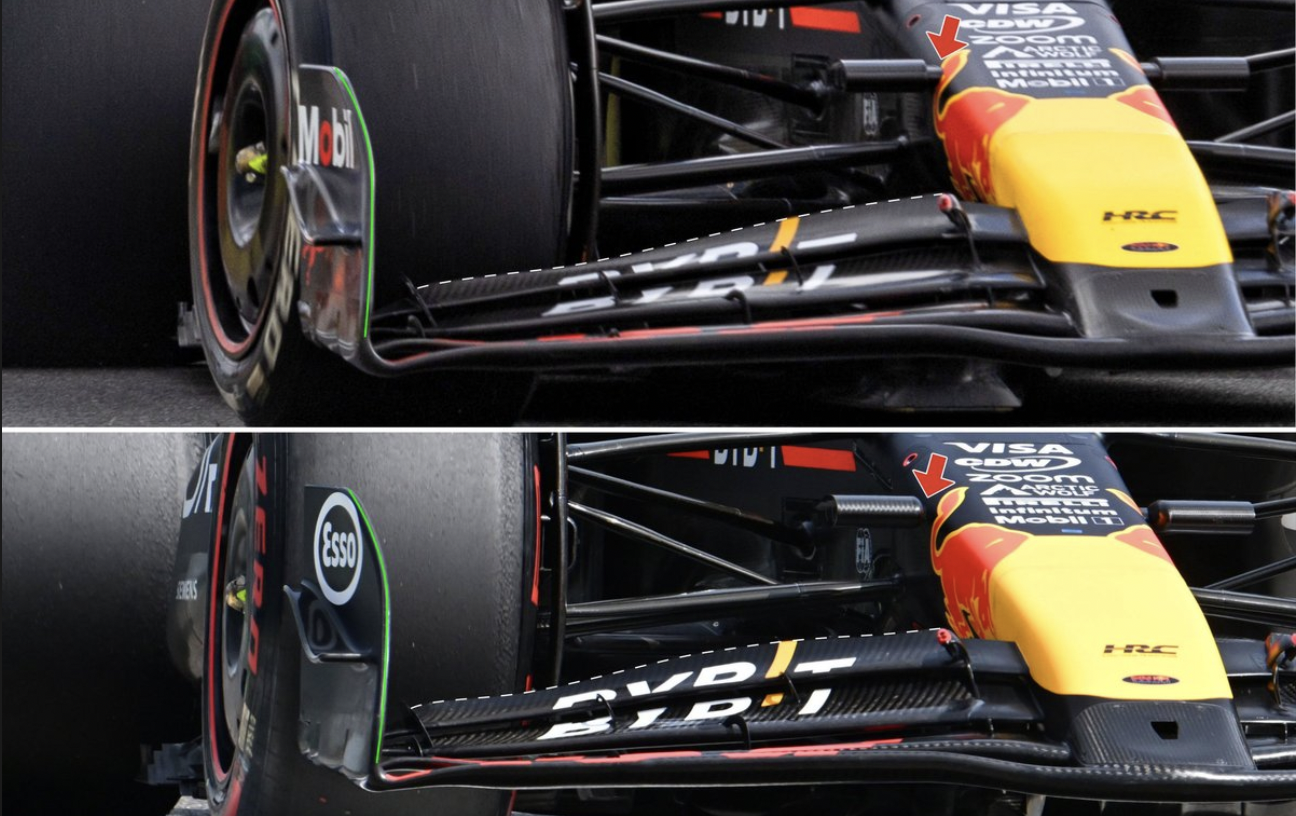
In response, Red Bull brought a series of upgrades to Imola for their RB20, addressing several areas of the car’s design. Key among these were modifications to the front wing, which featured a revised flap layout and changes to the nose.
The team extended the flap’s chord length on the moveable sections of the upper two flaps to generate more load. This adjustment is evident in the shape change of the upper flap’s trailing edge. As shown by the dotted white line in comparison images.
Additionally, the team modified the fixed sections beside the nose and the nose itself. Along with the camera pod stalks, to harmonize with the new aerodynamic flow. The outer extremities of the wing also saw alterations, particularly the leading edge of the endplate. Which now interacts differently with the airflow, impacting the diveplane’s performance.
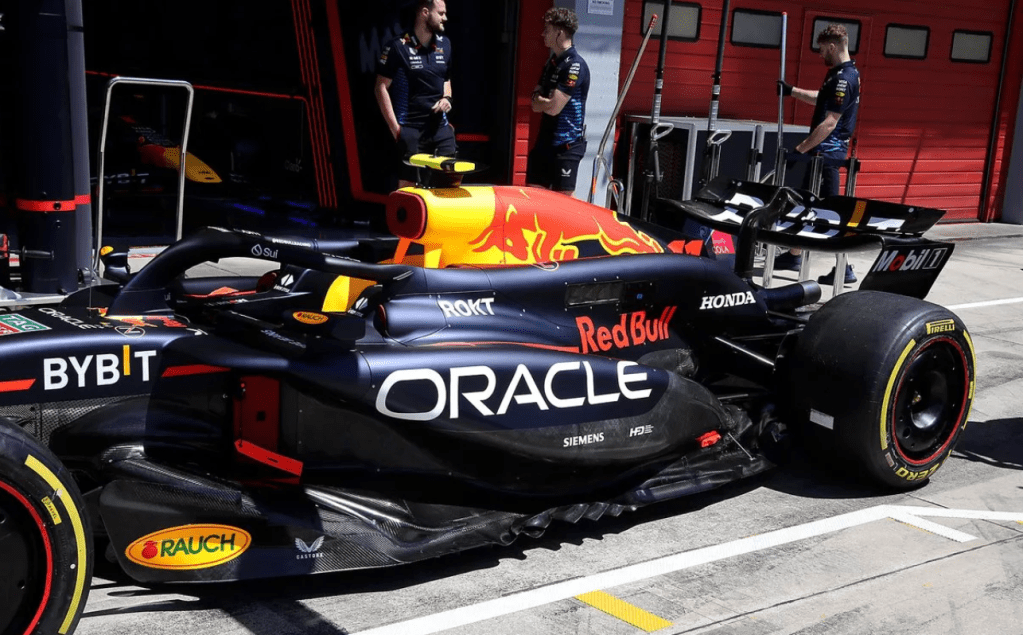
Further optimizations were made to the floor and edge wing design. The team reconfigured the ramped SIS cover section of the floor to enhance flow both above and below the surface. Consequently, they subtly modified the edge wing, repositioning the shedding surfaces below the element to improve aerodynamic efficiency.
At the rear, the team made changes to the rear brake duct, modifying the outlet to improve airflow. This adjustment also necessitated reconfiguration of the stacked winglets around the duct.
These upgrades reflect Red Bull’s commitment to maintaining their dominance and adapting swiftly to the challenges posed by rivals like McLaren. By continuously refining their car’s aerodynamics and addressing weaknesses. Red Bull aims to ensure they remain at the forefront of the F1 grid.


Leave a Reply