

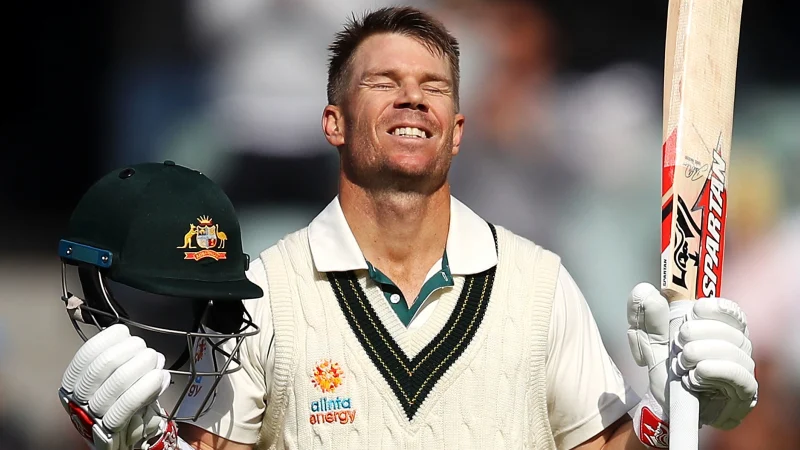
David Warner bids farewell to Test cricket, his career defined by chaos, artistry, and affection for the format.
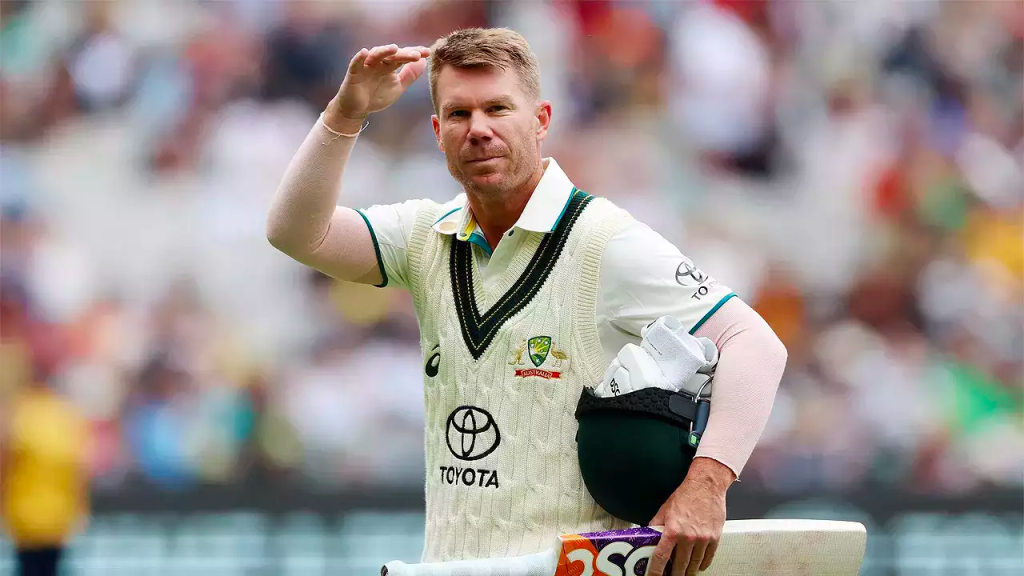
With David Warner departing Test cricket, varied sentiments arise about the once promising face of the game. His final Test innings, marked by annoyance at being dismissed lbw, encapsulated the complexity of Warner’s cricketing journey. Despite personal controversies and public animosity, there’s a rich tapestry to his career that extends beyond the boundary.
Warner’s entry into the cricketing world was nothing short of sensational. He went from a potential future star to an unconventional story, debuting in national T20 without first class experience. Warner’s ability to become the story continued, marked by his aggressive style and early contributions, such as carrying his bat for 123 on a Hobart green top in his second Test.
His cricket brilliance emerged, securing crucial victories, achieve twin centuries in Cape Town, and solidifying as a top order force. However, this brilliance was often accompanied by on field aggression, verbal spats, and a tumultuous journey that reached its nadir with the Cape Town ball tampering scandal in 2018.
Though some stains remain indelible, Warner’s career shouldn’t be defined by a single incident. Across 112 Tests, he amassed 26 centuries, leaving an indelible mark on Australian cricket. His international records include 22 one-day centuries, two World Cup victories, a T20 World Cup, and a World Test Championship.

Aside from Tests, Warner contributed significantly in the IPL, participating in every season from 2009, except during his suspension. His dedication to the longest format of the game, despite excelling in T20s, exemplifies a rare commitment. Warner’s baggy green cap, lost and found, symbolized his reverence for Test cricket—the ultimate aspiration for Australian players.
Warner’s retirement leaves Test cricket with a sense of something old fashioned. In an era dominated by T20 leagues, Warner, the pioneer of the IPL, dedicated himself whole heartedly to the traditional format. His dual identity as an entertainer—smashing boundaries, executing reverse scoops, and captivating crowds—and a polarizing character defined his on field persona.
The tapestry of Warner’s career is a blend of chaos and artistry, akin to a Jackson Pollock painting or a Bayeux tapestry. The switch hitter, the kamikaze runner, and the on field provocateur—all are part of this cricket canvas. While Warner’s career might have induced migraines for some, there’s no denying the artistry in its construction and the significance it holds as it comes to an end.
In the grand spectacle of cricket, Warner’s image remains central—a character in white with no claim to angelic attributes. For those who followed the game for the past 15 years, Warner was an integral part of their cricketing experience. Complexity exists, and Warner’s departure prompts a nuanced reflection on a career that transcends binary judgments. While some may find it easy to hate Warner, for many, it’s been impossible. Thanks, Dave. It’s been a fun, chaotic, and artistic ride.
For more latest sports news and updates, click here.


Leave a Reply